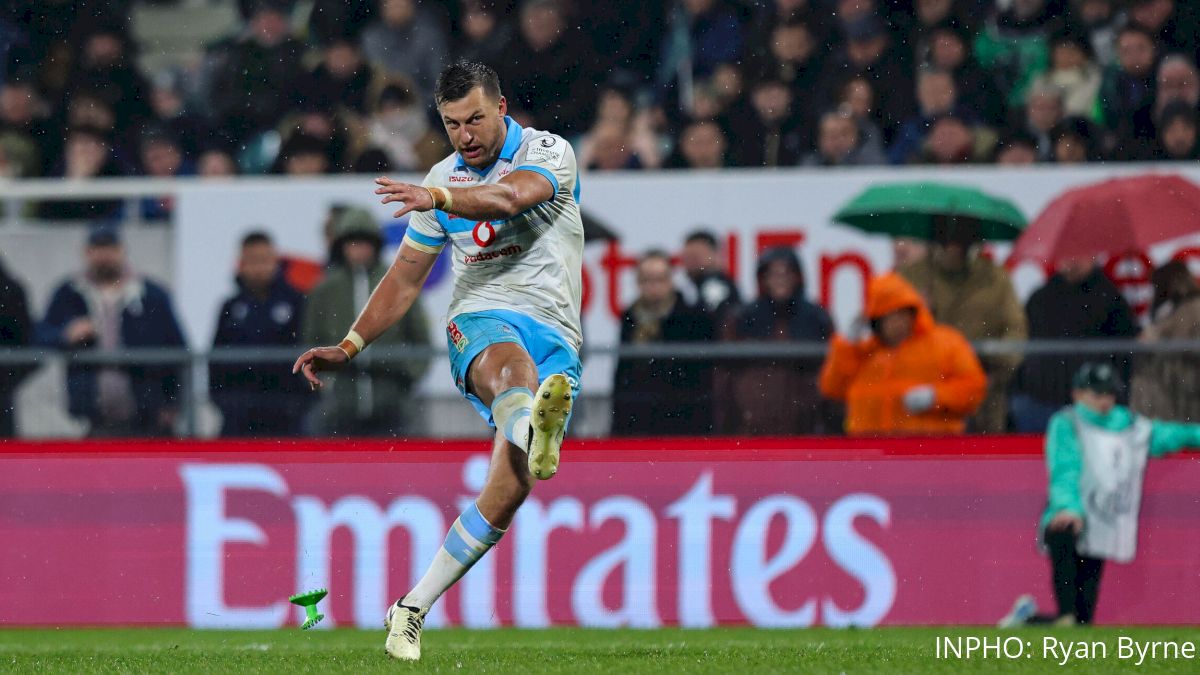
The Vodacom Bulls Rugby have reached the point where another deep playoff run can be both impressive and insufficient.
Four United Rugby Championship finals in five seasons establish Pretoria as one of the competition’s defining powers. Zero championships explain the pressure surrounding everything that follows.
Johan Ackermann’s first season reinforced both sides of that identity: the Bulls survived a seven-match losing streak across competitions, rebuilt themselves during the campaign, reached another Grand Final, then were dismantled 36-7 by Leinster.
- Subscribe To FloRugby To Watch Rugby All Season Long
- What's Streaming On FloRugby? Take A Look At The Schedule
- The Best Rugby Players In The World 2026
The Bulls remain championship-caliber, but the team that came closest has lost Wilco Louw, Ruan Nortjé, Kurt-Lee Arendse and David Kriel. Smart recruitment has softened the damage without erasing it.
The central question is therefore not whether the Bulls are contenders. They plainly are. It is whether a team built to overpower opponents and score freely can become controlled enough away from Loftus Versfeld to win the matches that decide trophies, while replacing foundational pieces of the pack.
What 2025-26 Told Us About The Bulls
The Bulls finished fourth at 12-6 with 59 points, 566 points scored, 406 conceded and 82 tries. Those numbers reveal the contradiction better than the table does.
Their 566 points and 82 tries exceeded the totals of regular-season champion Glasgow, Leinster and the Stormers. But their 406 points conceded were comfortably worse than all three. The Bulls possessed championship attacking output without championship defensive control.
Their season also proved their resilience. After opening with victories over Ospreys and Leinster, the Bulls spiraled into a seven-match losing streak across the URC and Champions Cup. Assistant coaches Andries Bekker and Chris Rossouw were dismissed, Ackermann became more directly involved, and Neil de Bruin eventually arrived as attack coach.
From there, the Bulls transformed. They finished the URC regular season with six consecutive victories, crushed Munster 45-14 in the quarterfinal and produced their defining performance at Murrayfield, recovering from 21-3 down to beat Glasgow 22-21.
- Who Are Rugby's Highest-Paid Stars? Here Are The Biggest Contracts In The Sport
- The Complete United Rugby Championship 2026-2027 Schedule: Every Fixture, Derby And Key Date
- URC Rivalries To Watch In 2026-2027: The Biggest Derby Matches On The Schedule
Then Leinster exposed the remaining gap. The Bulls trailed 22-0 at halftime of the final and lost 36-7.
That is the lesson carrying into September. The Bulls can survive turbulence, score with anybody and win a knockout match away from Pretoria. What they have not demonstrated is repeatable control against the best opponent, away from Loftus, with the championship on the line.
The Offseason Changed The Championship Equation
The Bulls recruited well. Louw’s move to the Stormers is the most important tactical departure. The Bulls are not merely replacing a tighthead; they are replacing an elite scrummager whose pressure could shape knockout matches. Nortjé’s move to Japan removes the captain and a central lineout organizer. Arendse takes Test-level finishing to Japan, while Kriel’s move to La Rochelle eliminates extraordinary versatility across center, wing and fullback.
Johan Goosen and Jan Serfontein also retired.
View this post on Instagram
The response was intelligent rather than extravagant. Hanro Liebenberg returns from Leicester on a three-year deal and brings leadership, work rate and lineout value to an absurdly deep back row. Curwin Bosch arrives from Brive as a legitimate starting-caliber fly-half or fullback, crucial insurance whenever Handré Pollard is unavailable. Thaakir Abrahams provides pace at wing or fullback and is the closest functional replacement for Arendse.
Mawande Mdanda enters the tighthead competition, while Hakeem Kunene, Dylan Maart and Sango Xamlashe refresh the backs. Luan Giliomee is a longer-term fly-half investment.
Ackermann also enters Year 2 with a staff more clearly shaped around him, and kicking specialist Vlok Cilliers has returned as a consultant.
The verdict: the Bulls are deeper in selected areas and more settled organizationally, but slightly weaker in proven top-end personnel. A healthy Cameron Hanekom can offset some of that decline. Nobody can assume the new tighthead hierarchy will immediately replace Louw.
Vodacom Bulls Projected Starting XV For 2026-27
This is a projection, not an announced lineup, and international availability will frequently change it.
- Loosehead Prop — Gerhard Steenekamp
- Hooker — Johan Grobbelaar
- Tighthead Prop — Francois Klopper
- Lock — Cobus Wiese
- Lock — Reinhardt Ludwig
- Blindside Flanker — Elrigh Louw
- Openside Flanker — Marco van Staden
- No. 8 — Cameron Hanekom
- Scrum-Half — Embrose Papier
- Fly-Half — Handré Pollard
- Left Wing — Thaakir Abrahams
- Inside Center — Harold Vorster
- Outside Center — Canan Moodie
- Right Wing — Sebastian de Klerk
- Fullback — Willie le Roux
Projected Bench
- Jan-Hendrik Wessels
- Alulutho Tshakweni
- Mornay Smith
- Ruan Vermaak
- Hanro Liebenberg
- Marcell Coetzee
- Paul de Wet
- Curwin Bosch
The hardest calls are in the back row, where leaving a player of Coetzee’s experience on the bench illustrates the Bulls’ remarkable depth. Liebenberg could easily start. Tighthead is less luxurious: Klopper, Smith, Khuta Mchunu and developing Mdanda are competing to replace Louw, but the concern is quality at championship level rather than numbers.
Ludwig has a major opportunity alongside Wiese, with Ruan Vermaak and JF van Heerden also pushing for minutes. Cheswill Jooste is an important back-three challenger. Bosch could force his way into the XV at 10 or 15 depending on Pollard’s availability and how Ackermann wants to use Le Roux.
The Players Who Make The Bulls Go
Pollard is the most important Bull because his strengths address the team’s biggest unsolved problem. Pretoria does not need him to manufacture spectacular attack every week. It needs his territorial judgment, goal kicking and composure when a semifinal or final becomes ugly and the Bulls cannot score 40.
Papier gives the halfback pairing its electricity. South Africa’s 2025-26 URC Player of the Season scored nine regular-season tries, added five assists, beat 25 defenders and made 15 clean breaks. He is not simply a distributor beside Pollard. He is one of the team’s primary line-breaking threats.
- FloRugby's Top 100 Rugby Players: Nos. 10-1 Reveal A New No. 1 In World Rugby
- Jordie Barrett, Finn Russell Lead FloRugby's Top 100 Rugby Players: Nos. 20-11
- Pieter-Steph du Toit Headlines FloRugby's Top 100 Rugby Players: Nos. 30-21
- Eben Etzebeth, Cam Roigard Lead FloRugby's Top 100 Rugby Players: Nos. 40-31
- Wallace Sititi, Handré Pollard Headline FloRugby's Top 100 Rugby Players: Nos. 50-41
- Ange Capuozzo, Josh van der Flier Lead FloRugby's Top 100 Rugby Players: Nos. 60-51
- Jack Willis Headlines FloRugby's Top 100 Rugby Players Rankings: Nos. 70-6
- Andrew Porter Headlines FloRugby's Top 100 Rugby Players Rankings: Nos. 80-71
- Grant Williams, Garry Ringrose Headline FloRugby's Top 100 Rugby Players: Nos. 90-81
- Nos. 100-91 Begin The Countdown To Rugby's Best
Moodie supplies rare positional and athletic value at outside center or wing. He scored the Bulls’ only try in the 2026 final and can create something when attacking structure fails.
Hanekom might provide the biggest internal improvement. His 2025-26 campaign was largely lost to a nine-month injury absence before his March return. A healthy season from a No. 8 already back in the Springbok picture changes the Bulls’ carrying and connectivity.
Then there is Ludwig, the breakout candidate. Nortjé’s departure creates minutes, responsibility and a lineout vacuum. Ludwig has already captained the Bulls and covers lock or flank. If he becomes a first-choice second-row leader, one of the offseason’s biggest questions becomes far less frightening.
How The Bulls Win
Calling the Bulls a forward-power team is accurate but incomplete. Their best rugby combines set-piece pressure and direct carrying with Papier’s speed, Pollard’s control and dangerous outside backs.
The scrum was a genuine weapon with Steenekamp, Grobbelaar and Louw. Steenekamp and Grobbelaar remain, but the right side is now the tactical question that could define the season. If the Bulls still win scrum penalties, Pollard can convert them into territory and points. If that advantage disappears, their entire knockout formula becomes less imposing.
The back row offers Ackermann answers for almost any game. Van Staden and Coetzee bring breakdown pressure; Elrigh Louw brings direct power; Hanekom carries and connects; Liebenberg adds work rate and lineout presence. The Bulls can select heavy or mobile combinations without exhausting their URC-quality depth.
- Top 50 Rugby Union Prospects 2026: No. 10-1
- Top 50 Rugby Union Prospects 2026: No. 20-11
- Top 50 Rugby Union Prospects 2026: No. 35-21
- Top 50 Rugby Union Prospects 2026: No. 50-36
Papier changes defenses around the ruck, while Pollard and Bosch give the Bulls multiple territorial and goal-kicking options. Le Roux can operate as a secondary playmaker, preventing every attacking decision from falling on the fly-half.
The attack is proven. During their six-game winning streak to close the regular season, the Bulls scored 40, 34, 47, 23, 54 and 45 points.
Defense is where the formula breaks. They conceded 181 points in four Champions Cup pool matches. Against Glasgow in the European round of 16, they created one clean break, conceded 15 penalties and lost 25-21 despite 90% success at both scrum and lineout. Opponents can hurt them by accelerating beyond their defense or by denying front-foot ball and forcing a constrained territorial contest.
Why The Bulls Can Win The URC
Few contenders possess a stronger spine from loose forward through halfback. Hanekom, Elrigh Louw, Van Staden, Coetzee and Liebenberg give Ackermann extraordinary selection options in front of Papier and Pollard.
They already know how to reach June. Four finals in five seasons mean playoff pressure is normal rather than novel. Last season’s comeback against Glasgow also matters because it removed the argument that the Bulls simply cannot win a major knockout match away from Loftus.
Yet Loftus remains their best route. They went 7-2 there during the regular season and 8-2 including the Munster quarterfinal. Their attack produced 358 home points compared with 208 away. Finishing in the top two and forcing elite opponents to visit Pretoria could change the championship geometry.
There is also plausible internal growth. Hanekom can play far more rugby than last season. De Bruin has a full preseason inside Ackermann’s program. Bosch strengthens the Bok-window team. Abrahams adds speed. Ludwig and Van Heerden have room to grow.
The Bulls do not need reinvention. They need their existing strengths to survive the personnel changes and travel better.
What Could Stop The Bulls
The most plausible failure is not collapse. It is erosion.
Lose some scrum dominance without Louw. Lose some lineout certainty without Nortjé. Lose some finishing without Arendse and flexibility without Kriel. Drop games during Springbok windows. Arrive in January tired during a brutal combined URC and Champions Cup travel sequence. Finish fourth, fifth or sixth instead of first or second. Suddenly another championship run requires elite opponents away from Pretoria.
International availability makes that danger immediate. The September 26 opener at Zebre overlaps with South Africa’s Test against Australia in Perth. Munster away follows six days later. The December 5 Lions trip comes shortly after Nations Championship Finals Weekend. Mandatory rest could extend absences.
Then there is defense. The Bulls can score championship numbers, but 406 regular-season points conceded and a minus-68 Champions Cup pool differential are not incidental. Leinster has twice demonstrated the consequence when the Bulls cannot dictate the match.
Discipline is another knockout concern rather than a proven season-long crisis. Moodie and Le Roux received deliberate-knock-on yellow cards in the 2026 final. Against Glasgow in Europe, the Bulls conceded 15 penalties.
Most of all, they must prove the last two finals were not their ceiling.
2026-27 Outlook: Contenders, But Not Favorites
The Bulls belong with Glasgow and the Stormers in the leading challenger group behind Leinster. Their realistic regular-season range is third through sixth, although a top-two finish is attainable if they negotiate international absences and preserve Loftus.
A semifinal should be the minimum defensible target. Another final is entirely realistic. Winning the URC is credible, but the Bulls should not be favorites after losing consecutive finals to Leinster by 25 and 29 points.
Europe presents a second challenge. Northampton, Bath, Cardiff, Montpellier and Stade Français share their Champions Cup pool, and December-January travel will force difficult workload decisions. Reaching the European knockouts while remaining positioned for a home URC playoff would represent meaningful dual-competition progress.
Success, however, is becoming harder to define without a trophy. After four finals in five years, simply qualifying for the playoffs proves little. A quarterfinal exit would be a major disappointment. A semifinal would be respectable but unsatisfying. Another final would confirm their extraordinary consistency while intensifying the central question.
The biggest reason for optimism is that the Bulls already possess the power, attack, halfbacks and playoff experience required to become champions. The biggest concern is that the offseason weakened exactly the set-piece foundations that make those strengths work.
That makes the 2026-27 Bulls the URC’s accomplished non-champion: dangerous, deep and capable of beating anyone, but still chasing the control that turns dominance into silverware. Their season will be decided not by whether they can look like champions at Loftus, but whether they can preserve their pack, defend better and make championship rugby travel.
Vodacom Bulls 2026-27 URC And Champions Cup Schedule: Every Match
United Rugby Championship
- Round 1: Zebre Parma vs. Vodacom Bulls, Sept. 26, 2026
- Round 2: Munster vs. Vodacom Bulls, Oct. 3, 2026
- Round 3: Vodacom Bulls vs. Lions, Oct. 10, 2026
- Round 4: Vodacom Bulls vs. Ulster, Oct. 24, 2026
- Round 5: Vodacom Bulls vs. Scarlets, Oct. 31, 2026
- Round 6: Lions vs. Vodacom Bulls, Dec. 5, 2026
- Round 7: Sharks vs. Vodacom Bulls, Dec. 19, 2026
- Round 9: DHL Stormers vs. Vodacom Bulls, Jan. 3, 2027
- Round 10: Benetton vs. Vodacom Bulls, Jan. 23, 2027
- Round 11: Leinster vs. Vodacom Bulls, Jan. 30, 2027
- Round 8: Vodacom Bulls vs. DHL Stormers, Feb. 21, 2027
- Round 12: Vodacom Bulls vs. Sharks, Feb. 27, 2027
- Round 13: Vodacom Bulls vs. Dragons, March 20, 2027
- Round 14: Vodacom Bulls vs. Edinburgh, March 27, 2027
- Round 15: Ospreys vs. Vodacom Bulls, April 17, 2027
- Round 16: Cardiff vs. Vodacom Bulls, April 23, 2027
- Round 17: Vodacom Bulls vs. Glasgow Warriors, May 8, 2027
- Round 18: Vodacom Bulls vs. Connacht, May 15, 2027
Investec Champions Cup
- Round 1: Vodacom Bulls vs. Stade Français, Oct. 17, 2026
- Round 2: Montpellier vs. Vodacom Bulls, Dec. 12, 2026
- Round 3: Vodacom Bulls vs. Bath Rugby, Jan. 9, 2027
- Round 4: Northampton Saints vs. Vodacom Bulls, Jan. 15, 2027
Vodacom Bulls 2026-27 Frequently Asked Questions
How Can Rugby Fans In The United States Watch The Vodacom Bulls On FloRugby?
Rugby fans in the United States can watch the Vodacom Bulls throughout the 2026-27 season on FloRugby, with matches also available to stream through the FloSports app.
What League Do The Vodacom Bulls Play In?
The Vodacom Bulls play in the United Rugby Championship, an international professional club competition featuring teams from South Africa, Ireland, Scotland, Wales and Italy.
Where Did The Vodacom Bulls Finish In The 2025-26 URC?
The Bulls finished fourth in the 2025-26 URC regular season with a 12-6 record and 59 table points. They defeated Munster 45-14 in the quarterfinal and Glasgow Warriors 22-21 in the semifinal before losing 36-7 to Leinster in the URC Grand Final.
Who Is The Vodacom Bulls Head Coach?
Johan Ackermann is the Vodacom Bulls head coach. The former Bulls and Springbok lock was appointed in July 2025 and led the Bulls to the 2026 URC Grand Final during his first season in charge.
Who Is The Vodacom Bulls Captain?
The Bulls had not officially announced a permanent 2026-27 captain as of Sept. 5, 2026. Marcell Coetzee repeatedly captained the team during the second half of 2025-26 and led the Bulls during their playoff victories over Munster and Glasgow.
Where Do The Vodacom Bulls Play Their Home Matches?
The Bulls play their home matches at Loftus Versfeld in Pretoria, South Africa. They went 7-2 at Loftus during the 2025-26 URC regular season and 8-2 there when including their home playoff victory over Munster.
What European Competition Are The Vodacom Bulls Playing In?
The Bulls are competing in the 2026-27 Investec Champions Cup. Their Pool 4 opponents are Northampton Saints, Bath Rugby, Cardiff, Montpellier and Stade Français.
Did The Vodacom Bulls Make The 2026 URC Playoffs?
Yes. The Bulls qualified as the No. 4 seed, defeated Munster 45-14 in the quarterfinal and came back from 21-3 down to beat Glasgow Warriors 22-21 in the semifinal. Leinster defeated the Bulls 36-7 in the Grand Final.
Have The Vodacom Bulls Ever Won The URC?
No. The Bulls have reached four URC Grand Finals in five seasons without winning the championship. They finished runner-up in 2022, 2024, 2025 and 2026.
Who Are Some Vodacom Bulls Players To Know In 2026-27?
Handré Pollard, Canan Moodie, Cameron Hanekom, Gerhard Steenekamp and Johan Grobbelaar are among the Bulls' current Springbok players. Scrum-half Embrose Papier was South Africa's 2025-26 URC Player of the Season, while Marcell Coetzee, Willie le Roux and new signing Curwin Bosch also bring substantial international experience.
Who Did The Vodacom Bulls Sign For 2026-27?
The Bulls' confirmed additions include Hanro Liebenberg, Curwin Bosch, Thaakir Abrahams, Luan Giliomee, Mawande Mdanda, Hakeem Kunene, Dylan Maart and Sango Xamlashe. Liebenberg returns from Leicester Tigers, Bosch arrives from Brive and Abrahams joins from Munster.
Who Left The Vodacom Bulls Before The 2026-27 Season?
Major departures include Wilco Louw, Ruan Nortjé, Kurt-Lee Arendse and David Kriel. Louw joined the Stormers, Nortjé moved to Japan, Arendse joined Mitsubishi Sagamihara DynaBoars and Kriel moved to La Rochelle. Johan Goosen and Jan Serfontein also retired.
Who Are The Vodacom Bulls' Biggest Rivals?
The Stormers are one of the Bulls' most important URC rivals and swept both meetings between the South African teams during the 2025-26 regular season. The rivalry becomes even more intriguing in 2026-27 after former Bulls tighthead Wilco Louw joined the Stormers.