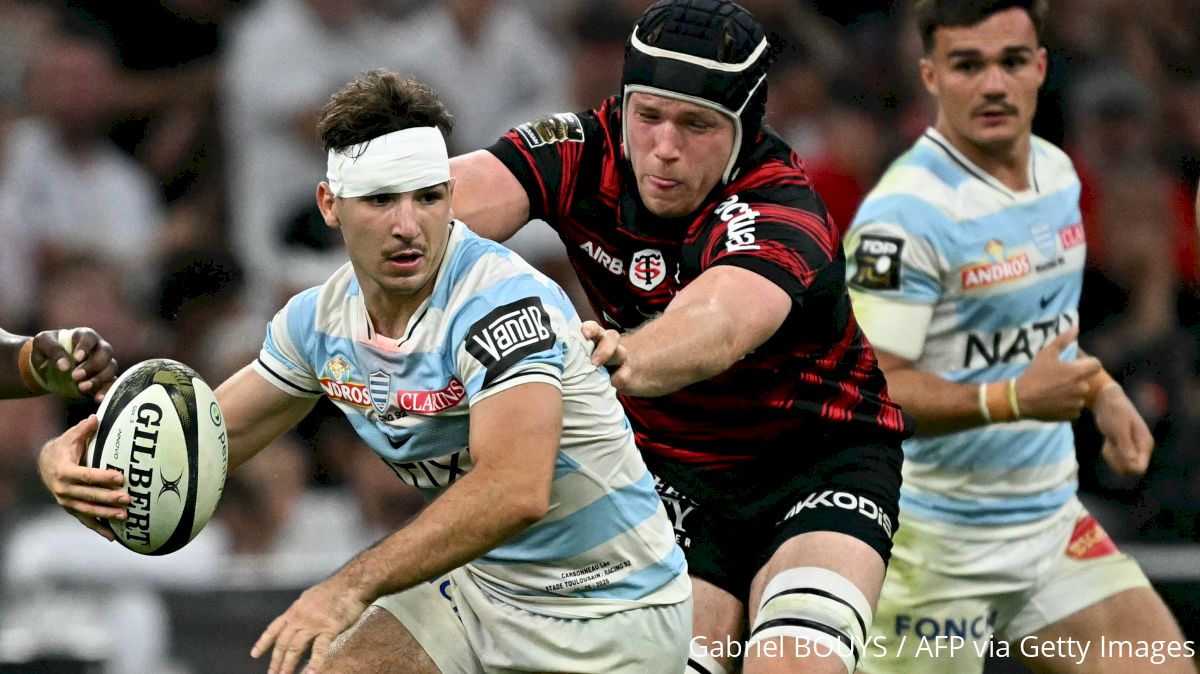
Racing 92 enters the 2026-27 Top 14 season in a considerably stronger position than it occupied a year ago. A fifth-place finish, an away playoff victory at Pau and a semifinal appearance represented substantial progress for a club that had finished 10th and missed the postseason in 2024-25.
But the final image of last season was impossible to ignore. Toulouse dismantled Racing 71-17 in the semifinal, turning what had been an encouraging domestic revival into a reminder of the distance still separating Patrice Collazo's team from the championship standard.
- Subscribe To FloRugby To Watch Rugby All Season Long
- What's Streaming On FloRugby? Take A Look At The Schedule
- The Best Rugby Players In The World 2026
- Top 50 Rugby Union Prospects 2026: No. 10-1 | FloRugby Rankings
Racing has responded not with another wholesale reconstruction, but with targeted recruitment around an increasingly important group of young players. That makes the question for 2026-27 straightforward: Was last season merely a rebound, or has Racing actually started building something capable of climbing higher?
What Racing 92's 2025-26 Season Revealed
Racing's fifth-place finish told only part of the story.
The club went 16-1-9 with 74 points, scoring 828 points and 101 tries. Only Toulouse and Stade Français scored more points during the regular season. Racing also conceded 723 points and 91 tries, however, establishing the contradiction that defined the campaign: This was one of the Top 14's most dangerous attacking teams without being one of its most complete.
Location mattered enormously. Racing went 12-0-1 in home-designated league matches but just 4-1-8 away.
There were signs of growth late in the season. Racing beat Stade Français 47-20 in the return Paris derby and closed the regular season with victories over Toulon, Clermont and Toulouse. Then came its most significant performance: a 33-31 barrage victory at fourth-place Pau, with Léo Carbonneau scoring twice and Antoine Gibert supplying 18 points with the boot.
Two weeks after beating Toulouse 31-20, however, Racing faced the champion again and lost 71-17 in Marseille.
Europe supplied another warning. Racing failed to advance from its Challenge Cup pool, a campaign that began with a 61-7 loss at Ulster.
The season therefore should not be remembered as a failure. Racing moved from 10th to fifth and reached a semifinal. But it also established what must improve next.
Racing 92 Transfers And Offseason Changes
Racing's offseason is notable for its restraint.
The club has moved toward academy development and targeted recruitment rather than assembling another collection of established stars. Nineteen academy-developed players appeared for the professional team in official competition last season, with an average of eight club-trained players in each matchday squad.
Paul Costes is perhaps the most intriguing arrival. The 23-year-old center joins from Toulouse on a contract through 2029 after making 17 appearances, including 14 starts, last season.
Seru Uru adds athleticism and lock/back-row versatility, while Nicolas Martins strengthens the back-row options. Benjamin Boudou returns to the Racing system at hooker, and 37-year-old Maxime Machenaud returns as an experienced scrum-half behind Carbonneau.

The major departure is Gaël Fickou, who joins Toulon. Racing also loses hooker Feleti Kaitu'u and lock Will Rowlands.
There also is change on Collazo's staff, with Julian Salvi joining as defense coach.
One important distinction concerns two prominent names. Joseph Manu remains at Racing throughout 2026-27 before returning to rugby league in June 2027. Thomas Ramos does not arrive until July 1, 2027, and therefore is not part of this season's roster.
Racing 92 Projected Starting XV And Bench
This is a projection based on Racing's current roster, last season's selections and the information available entering the season.
Starting XV
- Guram Gogichashvili, loosehead prop
- Janick Tarrit, hooker
- Demba Bamba, tighthead prop
- Jonny Hill, lock
- Romain Taofifenua, lock
- Maxime Baudonne, back row
- Shingirai Manyarara, back row
- Jordan Joseph, No. 8
- Léo Carbonneau, scrum-half
- Antoine Gibert, fly-half
- Vinaya Habosi, wing
- Josua Tuisova, center
- Joseph Manu, center
- Wilfried Hulleu, wing
- Max Spring, fullback
Projected Bench Options
- Benjamin Boudou
- Hassane Kolingar
- Taniela Tupou
- Seru Uru
- Ibrahim Diallo
- Maxime Machenaud
- Gerónimo Prisciantelli
- Paul Costes
There are genuine selection battles here. Costes could quickly force his way into the midfield, potentially allowing Habosi to concentrate on the wing. Uru also could challenge for a starting lock position.
The front row offers considerable options, particularly at tighthead, where Racing can choose between Bamba and Tupou. Hooker also should be competitive between Tarrit, Boudou and Diego Escobar.
Depth is less comfortable elsewhere. Racing's senior roster lists only two scrum-halves and one specialist fullback, making those positions vulnerable to injuries or international absences.
Racing 92 Players To Watch In 2026-27
Léo Carbonneau
Racing increasingly looks like Carbonneau's team. The 21-year-old played 28 matches with 25 starts last season, scored seven tries and led the Top 14 in kicking volume and territory gained from kicks. His two-try performance at Pau showed his influence extends beyond game management.
Maxime Baudonne
The 24-year-old played every Racing Top 14 match last season and recorded a team-leading 344 tackles and 16 breakdown steals. He supplies the defensive work that allows Racing's more explosive players to operate.
Max Spring: Racing's specialist senior fullback scored 11 tries in 20 Top 14 appearances last season. At 25, he is another important member of the club's emerging French core.
Joseph Manu
This is Manu's final season at Racing before his return to rugby league. His power, footwork and playmaking make him a central attacking piece, but his impending departure also gives this season a sense of urgency.
Shingirai Manyarara
The 22-year-old back-rower could make one of the biggest leaps. He made 16 appearances and 13 starts last season and emerged dramatically late in the campaign, including a 19-tackle performance against Pau.
Racing's Young Players And The Next Core
Perhaps the most significant change at Racing is not any individual signing. It is who the club increasingly expects to carry it.
Carbonneau, Baudonne, Spring and Manyarara were all 24 or younger last season. Costes arrives at 23, while Boudou is 24.
The academy continues beneath them. Auguste Albuisson, Yanis Basse, Mathis Boureau d'Argonne and Elia Masi signed first Espoir contracts, while Liam Couturier, Josaia Ralulu and Sione Tupou arrived on Espoir deals.
That creates a different model. Racing still employs significant international talent, but recruitment increasingly appears designed to complement its younger core rather than displace it.
Machenaud's return is a particularly clear example. Rather than replacing Carbonneau with an older scrum-half, Racing has brought back an experienced player who can provide support behind him.
How Racing 92 Plays
Racing's attacking numbers could easily create the wrong impression about its tactical identity.
Yes, this remains a dangerous attacking side. Racing scored 101 tries last season, with Spring, Tuisova, Manu, Habosi and Hulleu providing significant threats.
But Carbonneau's kicking statistics point toward a more territorial approach. Racing increasingly can use its scrum-half to control field position, create pressure and then give its backs opportunities to attack from favorable areas rather than depending upon extended possession.
View this post on Instagram
Gibert provides another form of control. His performance at Pau was decisive: three conversions and four penalties in a two-point playoff victory.
At the breakdown, Baudonne is fundamental, while Manyarara's emergence and Martins' arrival give Racing additional high-work-rate back-row options.
The unanswered question is defense.
Racing's 723 points and 91 tries conceded were too many for a team seeking to move into the championship's top tier, and Toulouse exploited that weakness brutally in the semifinal. Salvi's arrival as defense coach therefore makes Racing's work without the ball one of the most important early-season indicators.
Racing 92's Biggest Strength
Racing's greatest strength is the combination of a proven high-scoring attack and a young core with room to develop.
The club already ranked third in the Top 14 in scoring with 828 points. Yet Carbonneau, Baudonne, Spring and Manyarara are not players at the end of their careers. Costes now joins that emerging group.
Racing does not need to create attacking potential from scratch. It needs to make the rest of its game reliable enough for that attacking ability to decide bigger matches.
The Biggest Question Facing Racing 92
Can Racing become difficult enough to beat away from home?
Its 4-1-8 away regular-season record stands in sharp contrast with its 12-0-1 home-designated mark.
Winning the barrage at Pau demonstrated that Racing can deliver under knockout pressure away from home. The semifinal showed that doing it once did not solve the larger problem.
Complicating matters further is an extraordinary home situation in 2026-27. Racing will use multiple venues during a transitional season before returning to the renovated Stade Yves-du-Manoir in Colombes for its final two regular-season home matches.
For a team that depended so heavily on home results, reproducing that advantage without a consistent home stadium could become one of the season's defining variables.
Where Racing 92 Fits In French Rugby
Racing's current direction makes more sense when placed against its history.
The club traces its identity to Racing Club de France, founded in 1882, and won the inaugural French rugby championship in 1892. It has won six French championships in total, most recently in 2016.
That history makes Racing's coming move especially significant.
After an era associated with the ultra-modern indoor environment now known as Plenitude Arena, Racing is heading back toward Colombes and the renovated Stade Yves-du-Manoir, which will have a capacity of 14,000.
The transition creates a remarkable 2026-27 itinerary, with matches spread among Plenitude Arena, Stade Dominique-Duvauchelle in Créteil, other venues around France and eventually Colombes.
The Boxing Day derby against Stade Français is scheduled to be Racing's final rugby match at Plenitude Arena.
That gives the Paris derby another layer of meaning. Racing and Stade Français drew their first meeting last season before Racing won the return match 47-20.
What Should We Expect From Racing 92 In 2026-27?
The sensible target is confirmation.
Racing proved last season that it could return to the Top 14 playoffs. Now it must prove that fifth place and the semifinal were the beginning of something sustainable.
The roster looks deeper in several areas. Costes adds midfield upside, Uru brings another option to the pack, Martins strengthens the back row, Boudou adds competition at hooker and Machenaud gives Carbonneau experienced support. Fickou's departure, however, removes significant midfield experience and defensive quality.
A second consecutive top-six finish should be the baseline. Another semifinal would represent further progress, particularly if Racing can close the gap once it gets there. Falling back into the seventh-to-10th range remains possible if the defense fails to improve, the nomadic home schedule costs points or international absences expose thin positions.
Europe presents another test. Racing returns to the Champions Cup after failing to advance from the Challenge Cup pool stage last season. Becoming competitive enough to reach the Champions Cup knockout rounds would itself mark progress.
Racing is not yet where the Toulouse semifinal showed it needs to be. But that defeat should not obscure how much changed during 2025-26.
The pathway back toward the top is becoming clearer: develop Carbonneau, Baudonne, Spring and the next generation; recruit selectively around them; maintain one of the Top 14's most dangerous attacks; and build the defensive consistency and road performance necessary to survive against the league's best.
Racing has started climbing again. The 2026-27 season will determine whether it has actually learned how to keep going.
How To Watch FloRugby
FloRugby is available through a FloSports subscription. Subscribers can watch live rugby matches, full-match replays, highlights, original programming and exclusive coverage across multiple competitions. Stream on your computer at FloRugby.com or through the FloSports app on supported mobile devices and connected TVs.
Can You Watch Replays On FloRugby?
Yes. FloRugby subscribers can watch full-match replays after live events conclude, along with match highlights, interviews and other on-demand content. Replays allow fans to catch up on matches they missed or revisit key moments throughout the season.
Can You Watch FloRugby On TV?
Yes. FloRugby is available on many popular streaming platforms through the FloSports app, including Roku, Apple TV, Amazon Fire TV and Android TV. You also can cast from a compatible mobile device to supported televisions using Chromecast or AirPlay.
Can You Watch FloRugby On Mobile?
Yes. The FloSports app is available for iOS and Android devices, allowing subscribers to stream live matches, watch replays and follow rugby coverage from virtually anywhere with an internet connection.
What Rugby Competitions Are On FloRugby?
FloRugby streams a wide range of rugby competitions throughout the year, including major domestic leagues, international matches, European club competitions and select age-grade and collegiate events. Available competitions vary by region and broadcast rights, so check the FloRugby schedule for the latest listings.
Where Can I Find Rugby News, Schedules And Results?
FloRugby provides year-round rugby coverage, including breaking news, match previews, lineups, rankings, transfer news, schedules, results and standings.