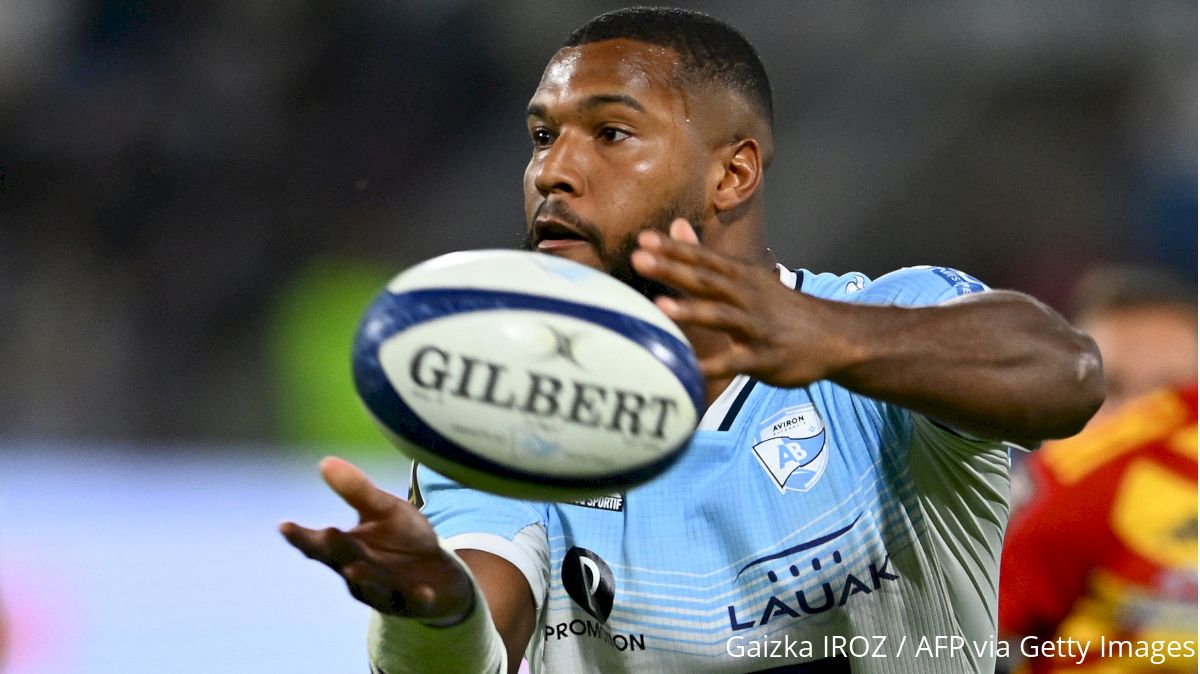
Aviron Bayonnais enters the 2026-27 Top 14 season trying to determine which of its past two campaigns better reflects the club's true level. Bayonne finished fourth and reached the Top 14 semifinals in 2024-25, then plunged to 12th last season with an 11-15 record and a minus-122 point differential.
That decline was not caused by an inability to score. Bayonne produced 94 tries and 747 points but conceded 869 points and 113 tries. A season that began with Bayonne leading the Top 14 after five rounds eventually included a coaching change, a 2-11 road record and only three victories over the final 13 league rounds.
- Subscribe To FloRugby To Watch Rugby All Season Long
- What's Streaming On FloRugby? Take A Look At The Schedule
- The Best Rugby Players In The World 2026
- Top 50 Rugby Union Prospects 2026: No. 10-1 | FloRugby Rankings
Now Gérard Fraser begins his first preseason as head coach, Laurent Travers remains director of rugby and an ambitious recruitment class has strengthened an already dangerous roster. Bayonne has enough talent to challenge for the playoffs. The question is whether it can repair the structural problems that turned a semifinalist into a 12th-place team in only one year.
What Bayonne's 2025-26 Season Told Us
Bayonne's 12th-place finish requires context because the collapse was dramatic.
The club started 8-5 through 13 rounds and produced a 40-26 victory over Toulouse during an opening stretch that put Bayonne atop the standings after five rounds. It then went 3-10 during the second half of the campaign.
The home-road divide was especially damaging. Bayonne finished 9-4 in nominal home matches but just 2-11 away, scoring 312 road points while conceding 540.
Europe was even harsher. Bayonne went 0-4 in the Investec Champions Cup and was outscored 173-58.
By February, the deterioration had reached the coaching staff. Bayonne and Grégory Patat ended their collaboration, with Fraser assuming greater responsibility alongside Travers.
The lesson was straightforward: Bayonne's attacking ceiling remained high, but its weekly stability disappeared. A team capable of scoring 94 league tries cannot concede 113, accumulate disciplinary problems and travel that poorly while expecting to remain near the top six.
Bayonne Transfers And Offseason Changes
Bayonne responded aggressively.
Léo Coly arrives from Montpellier as the likely successor to Maxime Machenaud at scrum-half. Guillaume Cramont strengthens the hooker group, while Killian Géraci, Brian Alainu'uese and Matthieu Uhila give the second row considerably more depth after Alex Moon's departure.
Alainu'uese is particularly intriguing after scoring six tries and making 136 tackles across 20 Top 14 appearances for Toulon last season.
Rob du Preez arrives from Sale Sharks as an alternative at fly-half or center, while Madosh Tambwe gives Bayonne another dangerous wing. Viliame Tutuvuli, Lasha Macharashvili and young back-rower Raphaël Darquier add further depth.
The departures include Machenaud, Baptiste Germain, Moon, retired back-rower Baptiste Chouzenoux, Gareth Anscombe and Reece Hodge.
Bayonne also secured two major pieces of its existing backline, extending Sireli Maqala through 2030 and Mateo Carreras through 2029.
The squad looks better on paper. Coly provides a potential long-term answer at No. 9, the lock rotation is deeper and du Preez and Tambwe expand an already dangerous collection of backs.
The coaching reset may matter just as much. Andrea Moretti oversees the forwards and set piece, Camille Lopez has greater responsibility for the attack and backs, Jean Monribot works with the forwards and Nick Abendanon has an individual-skills remit covering areas including the aerial game, tackling and breakdown technique.
Bayonne Projected Starting XV And Bench
Projected strongest available Bayonne 23 — not an announced lineup
- Andy Bordelai, prop
- Lucas Martin, hooker
- Tevita Tatafu, prop
- Arthur Iturria, lock
- Brian Alainu'uese, lock
- Alexandre Fischer, back row
- Esteban Capilla, back row
- Rodrigo Bruni, back row
- Léo Coly, scrum-half
- Joris Segonds, fly-half
- Mateo Carreras, wing
- Manu Tuilagi, center
- Sireli Maqala, center
- Tom Spring, wing
- Cheikh Tiberghien, fullback
Projected bench options: Guillaume Cramont, Ignacio Calles, Emerick Setiano, Killian Géraci, Baptiste Heguy, Baptiste Tilloles/Herschel Jantjies, Rob du Preez and Arnaud Erbinartegaray.
Hooker is one of the closest calls, with Cramont capable of overtaking Martin, while Géraci has enough quality to move into the starting second row.
Jantjies is more complicated because his contract and international situation remained uncertain entering the season. Giovanni Habel-Küffner also should not yet be projected into the strongest 23 after his Achilles rupture; he had resumed running by early August but had not fully returned to collective work.
Perhaps the most revealing selection problem is who does not make this projected 23. Tambwe, Federico Mori and Yohan Orabe are among the backs left outside it. Bayonne's shortage is no longer attacking options.
Bayonne Players To Watch In 2026-27
Tom Spring
Tom Spring scored 13 Top 14 tries last season, tied for second in the league, while beating 54 defenders and producing 1,115 carrying meters. At 23, he already has the production of a major attacking weapon.
Esteban Capilla
Esteban Capilla may have moved beyond breakout status. The 23-year-old back-rower scored 10 tries in only 16 Top 14 appearances and made 159 tackles. His combination of defensive workload and finishing ability makes him one of Bayonne's most compelling players.
Joris Segonds
Joris Segonds remains the team's control tower. He scored 222 league points last season, fourth-most in the Top 14, and his goal kicking and tactical kicking provide structure around Bayonne's more explosive runners.
Sireli Maqala
Sireli Maqala remains central to the midfield. His carrying production ranked among the best Top 14 centers, and his ability at the breakdown gives Bayonne another dimension beyond his attacking threat.
Léo Coly
Léo Coly may be the offseason addition who changes Bayonne most. The 26-year-old scrum-half arrives after 19 league appearances and 63 points for Montpellier last season. Bayonne needs him to connect its forward platform with Segonds and a backline loaded with finishing threats.

How Aviron Bayonnais Plays
Bayonne's 2025-26 numbers make the tactical problem unusually clear: scoring was not the issue.
The club averaged roughly 28.7 league points per match and scored 94 tries. Spring and Capilla combined for 23 tries, Maqala offered powerful midfield carrying and Carreras supplied another dangerous one-on-one threat.
Fraser's staff appears willing to continue using that athleticism. Bayonne beat Biarritz 42-26 during preseason after increasing the speed of its game after halftime, then scored seven tries against Toulouse and led 42-28 after an hour.
But Bayonne lost that Toulouse match 54-47.
That result captured the tension surrounding this team. Bayonne has the personnel to create an open game. It cannot afford to make every match one.
Segonds provides the mechanism for something more controlled. His kicking gives Bayonne the ability to play territory and convert opposition penalties into points. Du Preez offers a bigger alternative at No. 10 or 12.
Up front, Moretti's appointment and the recruitment of Alainu'uese, Géraci and Uhila point toward renewed emphasis on scrum, lineout and the forward platform.
The most urgent correction, however, involves what happens without the ball. Bayonne conceded an average of approximately 33.4 league points per match last season.
Discipline compounds that issue. Bayonne received 29 yellow cards and two reds, the most cards in the Top 14. A team already conceding too easily cannot repeatedly defend with 14 players.
Why Stade Jean-Dauger Is So Important To Bayonne
Stade Jean-Dauger is fundamental to understanding Bayonne's place in French rugby.
The 14,800-seat stadium sold out throughout the 2025-26 season despite Bayonne's slide to 12th. The club's rugby section dates to 1906, while the Peña Baiona soundtrack and supporter culture form a recognizable part of match days in the Basque city.
For international fans, Jean-Dauger is best understood as more than a professional sports venue. It functions as a civic gathering place in a rugby city, with Bayonne's regional identity carried directly into its match-day environment.
For years, that culture corresponded with an extraordinary competitive advantage.
Castres' 13-10 victory on Jan. 24 was the first opposing Top 14 victory at Jean-Dauger in nearly two years. Bayonne had compiled 21 consecutive Top 14 "home" victories when relocated games at Anoeta in San Sebastián were included.
Then the fortress cracked.
After Castres, Racing 92, Pau and Bordeaux-Bègles also won league matches at Jean-Dauger. Bayonne finished 8-4 there in Top 14 play, with another nominal home victory over La Rochelle coming at Anoeta.
Rebuilding Jean-Dauger's competitive intimidation is essential. But Bayonne's ceiling ultimately depends on exporting some of that competitiveness elsewhere. A 2-11 away record places too much pressure on home matches for a club with playoff ambitions.
Bayonne's Biggest Strength
It is the combination of attacking talent and home-field potential.
Spring scored 13 tries. Capilla scored 10. Segonds supplied 222 points. Maqala and Carreras remain major attacking threats, while Coly, Tambwe and du Preez have now joined the group.
Few teams coming off a 12th-place finish can construct a backline with this many credible options.
And if Jean-Dauger again becomes one of the league's hardest places for visitors to win, Bayonne has the foundation required to climb quickly.
The Biggest Question Facing Bayonne
Can Bayonne defend well enough — and stay disciplined enough — to allow its talent to matter?
The evidence from last season is severe: 869 points conceded, 113 tries allowed, a minus-122 differential, 29 yellow cards, two reds and a 2-11 road record.
Those problems overlap. Poor discipline puts greater stress on the defense. Defensive instability makes road matches harder to control. Road failures increase the pressure to be nearly perfect at Jean-Dauger.
Fraser does not need to remove the adventure from Bayonne's rugby. He needs to make sure Bayonne no longer requires four or five tries simply to remain competitive.
What Should We Expect From Bayonne In 2026-27?
Bayonne should enter 2026-27 as a credible Top 14 playoff contender rather than a championship favorite.
The roster is stronger than the one that finished 12th. More importantly, much of the core already has evidence that it can compete much higher in the table: Bayonne finished fourth and reached the semifinals in 2024-25.
The Challenge Cup also offers a more realistic European opportunity after Bayonne's winless Champions Cup campaign. Its pool includes the Cheetahs, Ulster, Perpignan, Dragons and Zebre Parma, although balancing European ambitions with a Top 14 push will test the improved depth.
The ceiling is a return to the top six and another meaningful playoff run. To reach it, Bayonne must restore Jean-Dauger, turn its road record from disastrous toward respectable and dramatically reduce the defensive and disciplinary damage that defined last season.
The floor is another lower-midtable campaign in which a spectacular attack merely produces more entertaining defeats.
That makes Bayonne one of the Top 14's most fascinating teams entering 2026-27. The semifinal run of 2025 showed what this club can become. The collapse that followed showed how fragile that progress remained.
Bayonne has demonstrated that it possesses an upper-tier Top 14 ceiling. It has not yet established itself as an upper-tier Top 14 club.
That is the next step.
How To Watch FloRugby
FloRugby is available through a FloSports subscription. Subscribers can watch live rugby matches, full-match replays, highlights, original programming and exclusive coverage across multiple competitions. Stream on your computer at FloRugby.com or through the FloSports app on supported mobile devices and connected TVs.
Can You Watch Replays On FloRugby?
Yes. FloRugby subscribers can watch full-match replays after live events conclude, along with match highlights, interviews and other on-demand content. Replays allow fans to catch up on matches they missed or revisit key moments throughout the season.
Can You Watch FloRugby On TV?
Yes. FloRugby is available on many popular streaming platforms through the FloSports app, including Roku, Apple TV, Amazon Fire TV and Android TV. You also can cast from a compatible mobile device to supported televisions using Chromecast or AirPlay.
Can You Watch FloRugby On Mobile?
Yes. The FloSports app is available for iOS and Android devices, allowing subscribers to stream live matches, watch replays and follow rugby coverage from virtually anywhere with an internet connection.
What Rugby Competitions Are On FloRugby?
FloRugby streams a wide range of rugby competitions throughout the year, including major domestic leagues, international matches, European club competitions and select age-grade and collegiate events. Available competitions vary by region and broadcast rights, so check the FloRugby schedule for the latest listings.
Where Can I Find Rugby News, Schedules And Results?
FloRugby provides year-round rugby coverage, including breaking news, match previews, lineups, rankings, transfer news, schedules, results and standings.