
Section Paloise enters 2026-27 facing a very different question than it did a year ago. Pau finished a club-best fourth in the Top 14 in 2025-26 with 78 points and a 17-9 record, reaching the playoffs for the first time since returning to the league in 2015.
That rise was driven by an attack that produced 817 points and 98 tries, a formidable home record and a young backline capable of punishing teams in transition. But Pau's progress was not exclusively about youth.
Argentina Rugby captain Julián Montoya, one of the world's premier hookers, completed his first season with Section Paloise after a long stint with Leicester Tigers. The 32-year-old made 15 Top 14 appearances, starting 13, and played 777 minutes.
- Subscribe To FloRugby To Watch Rugby All Season Long
- What's Streaming On FloRugby? Take A Look At The Schedule
- The Best Rugby Players In The World 2026
- Top 50 Rugby Union Prospects 2026: No. 10-1 | FloRugby Rankings
Pau has since strengthened around that core rather than dismantling it. The challenge now is turning one breakthrough season into sustained contention. Can Section Paloise simply return to the playoffs, or is this roster capable of pushing deeper into the Top 14 postseason?
What Pau's 2025-26 Season Told Us
Fourth place represented a significant leap from eighth in 2024-25.
Pau won 17 of 26 Top 14 matches while scoring 817 points and 98 tries. The attack could overwhelm opponents, highlighted by a 71-35 victory over Montauban, while a 27-17 win against Racing 92 demonstrated Pau's ability to beat stronger opposition.
Stade du Hameau was central to that success. Thirteen of Pau's 17 victories came at home, giving Sébastien Piqueronies' team a dependable foundation throughout the season.
But the playoffs exposed how narrow the margins become at the next level.
Racing 92 eliminated Pau 33-31 in the quarterfinal. For a team making its first playoff appearance since returning to the Top 14 in 2015, getting there represented substantial progress. Losing by two points also provided a clear picture of what remains.
Pau has established that it can reach the postseason. Now it has to become better at winning the matches that decide seasons.
Pau Transfers And Offseason Changes
Pau's offseason suggests a club trying to reinforce a successful structure rather than replace it.
Baptiste Pesenti arrives from Stade Français and adds another option in the second row. Bastien Vergnes-Taillefer joins from Bordeaux-Bègles to reinforce the back row, while Argentine Santiago Grondona returns to Pau after his time with Bristol and can provide versatility across the loose forwards and second row.
Gonzalo Garcia's arrival at scrum-half is particularly important.
Veteran Dan Robson returned to Gloucester after the season, creating a significant change at No. 9. Garcia, an Argentine international, arrives from Zebre Parma and joins Thibault Daubagna and Thomas Souverbie among Pau's scrum-half options.
Portuguese international Rodrigo Marta provides another option at wing or center after scoring 24 tries in 50 Pro D2 matches with Colomiers.
Pau has continued investing in the next generation as well. Back-rower Rémi Couty and wing/fullback Joachim Senga Kouo join as developmental additions, while key players including Daubagna, Emilien Gailleton and Grégory Arfeuil have been extended through 2029.
Piqueronies remains in charge, providing continuity after the best Top 14 finish in the club's recent history.
The roster appears deeper, particularly among the forwards. That matters because Pau's ability to match the physicality of the strongest Top 14 teams remains one of its central challenges.
Pau Projected Starting XV And Bench
This is a projected Section Paloise lineup for the 2026-27 season based on the available roster and positional information.
Loosehead prop to be determined
- Julián Montoya
- Etchebehere
- Capelli
- Picquette
- Sacha Zegueur
- Beka Gorgadze
- Lekima Credoz
- Thibault Daubagna
- Joe Simmonds
- Grégory Arfeuil
- Emilien Gailleton
- Fabien Brau-Boirie
- Théo Attissogbe
- Jack Maddocks
Projected bench options: Baptiste Pesenti, Bastien Vergnes-Taillefer, Santiago Grondona, Gonzalo Garcia, Clément Mondinat, Aaron Grandidier-Nkanang and Rodrigo Marta.
Montoya belongs at the center of any Pau lineup discussion. He started 13 of his 15 Top 14 appearances in 2025-26 and gives Pau an established presence at hooker.
The competition behind the starting XV should also be significant. Pesenti, Vergnes-Taillefer and Grondona increase Piqueronies' options in the forwards, while Garcia can challenge for minutes at scrum-half. Marta and Grandidier-Nkanang contribute to an unusually deep collection of attacking options.
Rather than manufacture a specific loosehead selection or front-row bench from incomplete positional information, those positions remain open in this projection.
Pau Players To Watch In 2026-27
Julián Montoya
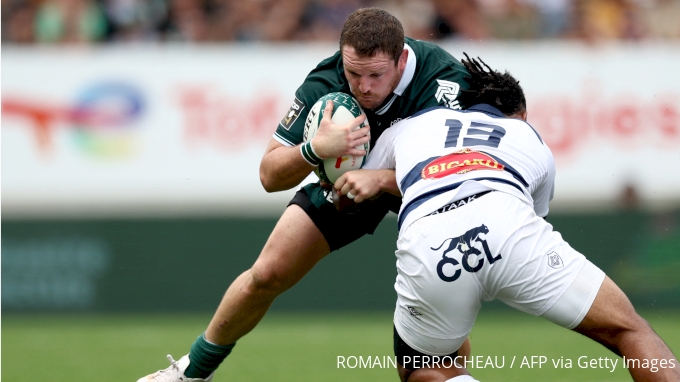
Julián Montoya should be one of the first names discussed when evaluating Section Paloise. The Argentina captain has 117 caps for Los Pumas and has spent his entire starting career at hooker. After joining Pau following his long spell with Leicester Tigers, he started 13 Top 14 matches in his first season. At 32, he gives a young and increasingly ambitious team elite experience in one of the most demanding positions on the field.
Emilien Gailleton
Emilien Gailleton remains central to Pau's attacking ceiling. The center scored 11 tries in 26 games last season, and his pace and support running give Pau a dangerous attacking option through midfield.
Théo Attissogbe
Théo Attissogbe provides another major threat. His ability to operate across the back three gives Pau flexibility alongside Gailleton, Arfeuil, Maddocks and Grandidier-Nkanang.
Thibault Daubagna
Thibault Daubagna becomes particularly important following Robson's departure. The scrum-half made 23 appearances in 2025-26 and helps orchestrate Pau's high-tempo attack.
Beka Gorgadze
Beka Gorgadze supplies much of the physicality Pau needs from its pack. His carrying and defense will be important as the club tries to become more consistent against the Top 14's strongest forward groups.
Joe Simmonds
Joe Simmonds also remains essential at fly-half, where his kicking and game management provide structure around Pau's more expansive attacking weapons.
Pau's Young Talent And Development Pipeline
Pau's development system is becoming increasingly important to the club's identity.
Gailleton, Attissogbe, Brau-Boirie and Arfeuil are part of a young group already contributing at senior level. Arfeuil played 20 games and scored six tries in 2025-26 and could take on an even larger role this season.
The next wave includes Senga Kouo and Couty.
Senga Kouo, 18, arrives as a wing/fullback and has signed through 2029. Couty, a 19-year-old back-rower, has also committed through 2029 and could earn senior opportunities as Pau rotates its forwards.
For Section Paloise, player development is more than a source of occasional reinforcements. It provides the foundation around which experienced players such as Montoya, Simmonds, Gorgadze and the club's targeted offseason additions can be placed.
That combination of youth and established experience is one of the most interesting elements of Pau's current project.
How Section Paloise Plays
Pau's attacking numbers reveal its preferred identity.
The club scored 817 points and 98 tries in 2025-26 with a style emphasizing quick ball, counterattacking opportunities and aggressive support lines. Gailleton, Attissogbe and Pau's other outside backs give the team the speed to exploit disorganized defenses.
Daubagna and Simmonds provide the structure underneath that ambition. Simmonds can use his kicking game to establish field position, but Pau is most dangerous when it can increase the tempo and create space.
The forwards represent the other side of the equation.
Pau has needed greater power in that area, while its scrum has been vulnerable and its lineout inconsistent. Montoya's presence at hooker gives the front row an experienced centerpiece, and the additions of Pesenti, Vergnes-Taillefer and Grondona provide further reinforcement.
Defense remains another area capable of determining Pau's ceiling. The club conceded 665 points and 82 tries last season.
The challenge is therefore not reinventing how Pau wins. It is giving an already potent attack enough set-piece stability, defensive resistance and control to win when games cannot be played entirely on Pau's preferred terms.
Why Playing In Pau Matters
Stade du Hameau became one of Pau's greatest advantages during its breakthrough season.
Thirteen of the club's 17 victories came at home. The roughly 15,000-capacity ground combines that competitive advantage with an identity deeply connected to Béarn.
Section Paloise has worn green and white since 1912, while the Ossau Peak motif on the club badge reflects its regional roots. "La Honhada," a Béarnese anthem, is sung before matches and has become part of the Hameau experience.
That culture matters, but so do the results.
A club trying to establish itself permanently in the Top 14 playoff places needs a reliable source of victories. Pau found one at home in 2025-26.
Maintaining it will be essential. Improving away from the Hameau could determine whether Pau merely stays in the playoff race or climbs higher.
Pau's Biggest Strength
Its combination of attacking talent and an increasingly experienced spine.
Pau scored 98 tries last season and possesses a collection of backs capable of creating points quickly. Gailleton, Attissogbe, Arfeuil and Brau-Boirie give the team youth and speed, while Daubagna and Simmonds provide experience at halfback.
Montoya adds another dimension to that spine.
An Argentina captain with 117 international appearances at hooker is precisely the type of player who can provide experience to a roster containing so many developing players.
Pau's attack makes it dangerous. The blend of that young attacking talent with established leaders gives the club a chance to become something more complete.
The Biggest Question Facing Pau
Can Pau consistently win the forward and defensive battles required against the Top 14's best teams?
The attack has already proven itself.
The next stage requires Pau to become less dependent on games opening up. Its scrum and lineout have had vulnerabilities, while conceding 82 tries left room for defensive improvement.
The recruitment of Pesenti, Vergnes-Taillefer and Grondona should give the pack additional options. Montoya's second season at the club also gives Pau an elite, experienced hooker around whom the front-row operation can be built.
If the forwards become a genuine strength rather than an area opponents can target, Pau's ceiling changes.
What Should We Expect From Pau In 2026-27?
Section Paloise should begin 2026-27 expecting to challenge for the Top 14 playoffs again.
Fourth place in 2025-26 changed the standard. Pau is no longer simply trying to prove it can spend a season around the playoff places. It has already done that.
There are legitimate reasons to believe the progress is sustainable. The young core remains largely intact. The pack has received reinforcements. Piqueronies remains in charge. Montoya enters his second season with the club after starting 13 Top 14 matches in his first.
There are also reasons not to immediately elevate Pau into the championship-favorite tier. The defense and set piece still have room to improve, and a 33-31 playoff defeat illustrated the margins Pau must learn to master.
A drop toward mid-table represents the floor if the home dominance fades or the forward issues persist. Another top-six challenge is the most reasonable expectation.
But Pau's ceiling is higher than simply qualifying.
If Montoya anchors an improved pack, the offseason additions provide the intended depth and Pau's young backs continue developing, a Top 14 semifinal is a realistic ceiling for Section Paloise in 2026-27.
That is how much the conversation in Béarn has changed. The question is no longer whether Pau can reach the playoffs.
It is what Pau can do once it gets there.
How To Watch FloRugby
FloRugby is available through a FloSports subscription. Subscribers can watch live rugby matches, full-match replays, highlights, original programming and exclusive coverage across multiple competitions. Stream on your computer at FloRugby.com or through the FloSports app on supported mobile devices and connected TVs.
Can You Watch Replays On FloRugby?
Yes. FloRugby subscribers can watch full-match replays after live events conclude, along with match highlights, interviews and other on-demand content. Replays allow fans to catch up on matches they missed or revisit key moments throughout the season.
Can You Watch FloRugby On TV?
Yes. FloRugby is available on many popular streaming platforms through the FloSports app, including Roku, Apple TV, Amazon Fire TV and Android TV. You also can cast from a compatible mobile device to supported televisions using Chromecast or AirPlay.
Can You Watch FloRugby On Mobile?
Yes. The FloSports app is available for iOS and Android devices, allowing subscribers to stream live matches, watch replays and follow rugby coverage from virtually anywhere with an internet connection.
What Rugby Competitions Are On FloRugby?
FloRugby streams a wide range of rugby competitions throughout the year, including major domestic leagues, international matches, European club competitions and select age-grade and collegiate events. Available competitions vary by region and broadcast rights, so check the FloRugby schedule for the latest listings.
Where Can I Find Rugby News, Schedules And Results?
FloRugby provides year-round rugby coverage, including breaking news, match previews, lineups, rankings, transfer news, schedules, results and standings.