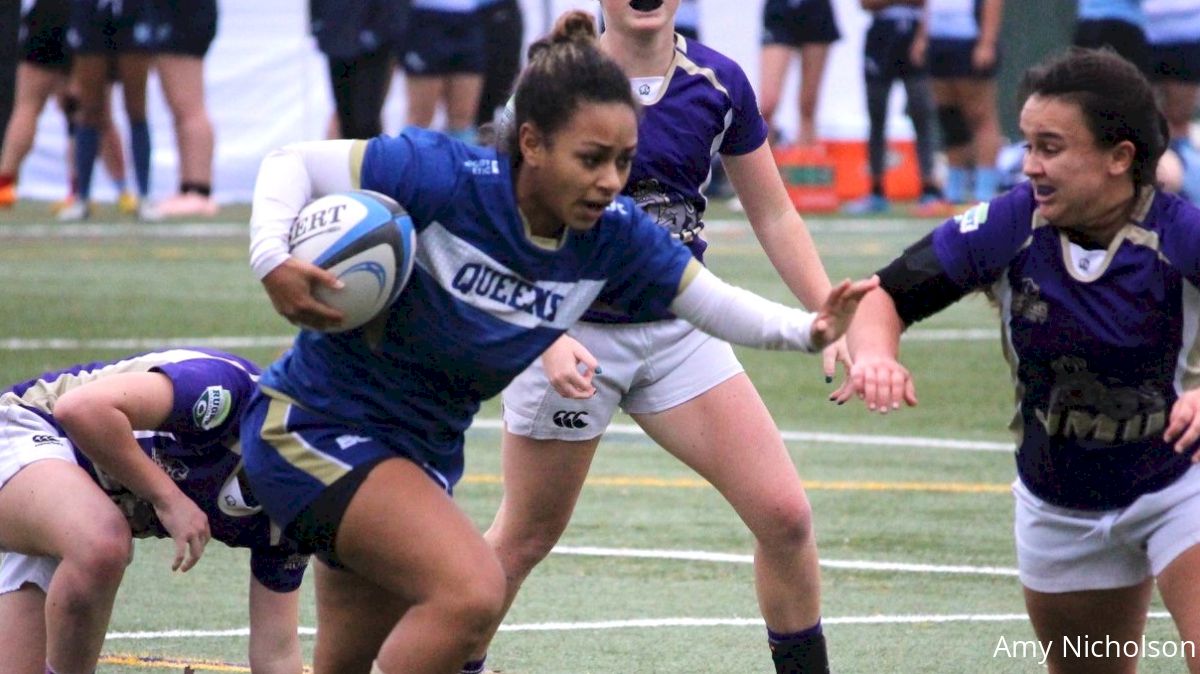
When it comes to the DI Mason-Dixon conference, UVA has been the team to beat, and the last couple of years has seen Virginia Tech rise as a consistent runner-up and post-season threat—but there's another contender now.
By Jackie Finlan
The Hokies beat UVA in the teams’ fall matrix match, and that result has built extra anticipation for their rematch on Feb. 23. Meanwhile Queens University of Charlotte, in its first year in Division I, has gone unbeaten in the conference’s South pool. The Royals topped Clemson, North Carolina, NC State and South Carolina by a combined 261-5 in the fall, and is quietly optimistic about its potential in the post-season.
“We were really looking forward to the opportunity to compete in the Mason-Dixon conference just because of its long, storied history of producing strong DI competition,” said Queens Director of Rugby and women’s head coach Katie Wurst. “We wanted to be competitive and, this being our second year [in existence], viewed this as a natural stepping stone [from DII].”
Watch The Women's D1 College Final LIVE on FloRugby
The Royals found themselves in a similar situation last year, cruising through the first half of the DII Carolinas league before sustaining too many injuries to field a competitive 15s side. It wasn’t so surprising considering Queens was a first-year program playing in a split-season, especially as it overlaps with spring sevens and ticks up the match count per athlete.
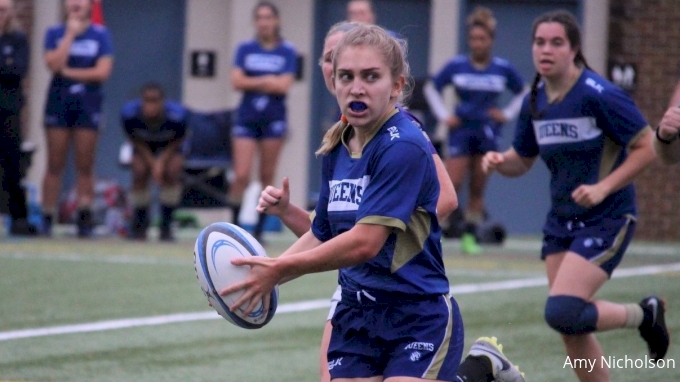
Year two brought in a host of quality recruits who were ready to work through the awkwardness that inevitably accompanies growth. Numbers allowed Queens to bump up to DI in 2018-19 and also field a National Small College Rugby Organization (NSCRO) side for the foundling Carolinas league. There have been challenges as Wurst and staff strive to give every athlete a comparable experience, but the goal is to meet players at their level, provide more competitive opportunities, and make the sport approachable to interested individuals.
“It’s been a really interesting experiment to see how things can potentially go in the future, for the growth of women’s rugby in general,” Wurst said.
The rest of Queens’ varsity sports compete in the NCAA South Atlantic Conference (SAC), and none of its members save the Royals field women’s rugby. Now, those SAC athletic departments that are curious about what it would take to build a women’s rugby program from scratch and what its competition might look like have a resource in Queens. Landers University and Alderson Broaddus – two small schools that have upped their support for rugby—are just two examples of teams that can derive some lessons from Queens’ course.
Queens’ NSCRO side will now shift its focus to sevens, because NSCRO plays 15s in the fall and sevens in the spring. The expanded Queens Cup 7s is looking to host an eight-team NSCRO division (along with DI/NIRA, men’s college and girls high school divisions) for nationals qualification. The DI side is readying for more unknowns in the second half of the 15s season.
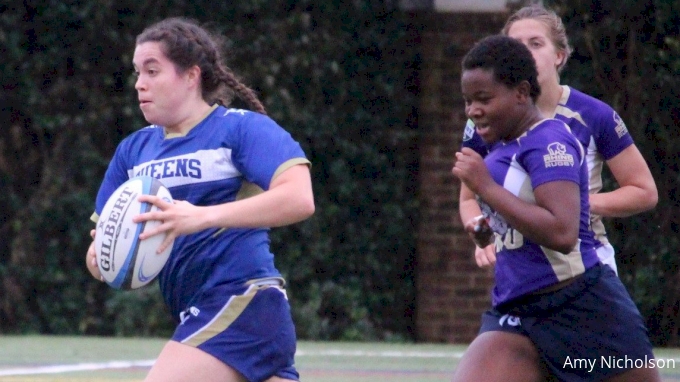
“We have enjoyed training hard and working together and learning every day – that’s the goal,” said Wurst. “With a split season, it’s unique, because teams do change over that time. Athletes graduate, crossovers from other sports … find rugby in the spring. There are some unique adjustments.
“The real focus for us is to build more cohesion. We’re still a young, growing program,” the head coach said of the mostly freshman and sophomore squad. “We get excited for opportunities at playoffs, but each week it’s: What are the tasks we have to take on and who is the opposition?”
Sophomores Bridget Mielke and Bella Alanis are leading the team as co-captains, and they’ve done a great job ushering the squad through a successful fall. Of the 20 players who scored tries in the first four matrix matches, Antares Lance has dazzled with nine. Nicole Mitchell (39) and Mielke (38) lead point-scorers with a combination of tries and conversions.
It’s all coming together quickly for Queens, and it’s the result of the right people in the right places, and loads of support and flexibility. There’s still a long way to go – four more matrix matches, North-South crossovers, conference championships, spring regional championships – before title talks commence, but the program is “wearing the crown” and going for it.