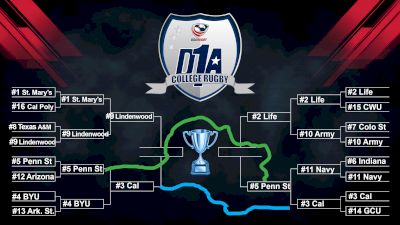
Changes are afoot in D1A Men's College Rugby for the 2018-19 season, but maybe not major changes.
From who's in what conference to who will play in what playoff, to what rules need to be, or need not be, in place, here's a quick rundown of what's going on.
New Faces
AIC and Boston College have finally joined the Liberty Conference. Some might say this should have happened last year, but regardless, it's happening now. AIC will join the I-95 division and BC will join the New England division.
What this does is make the I-95 even stronger than before, with a nice burgeoning rivalry between AIC and Iona developing. Boston College will immediately provide competition for defending champion Northeastern as well as #2 UConn.

The University of Notre Dame has officially joined D1A and will compete as an independent. The door is still ajar for the Fighting Irish to join the Big Ten in coming years, a move we're a fan of. The Big Ten doesn't have to have every team be national title contenders, but a more even split of the better teams and the not-better teams would help. Notre Dame's presence moved the Big Ten closer to that.
Other Team News
Speaking of the Big Ten, Iowa has left, moving to the D1AA Heart Of America. The Hawkeyes were winless in the Big Ten and need to consolidate and get back to basics. It's likely the right move. The University of Southern California also drops out of D1A.
Meanwhile, Utah Valley University was all set to be out of D1A after some player eligibility violations. But then David Smyth and Wayne Tarawhiti left BYU and joined Utah Valley University — the change was prompted by dissatisfaction with BYU's oversight of the team (treating it as a campus rec entity rather than a non-varsity intercollegiate sport — moving extramural sports to be part of the Student Life Department).

By taking on the UVU program, Smyth and Tarawhiti stay involved in college rugby in the Beehive State, and also help D1A management reconsider the direction of the Wolverines program. Utah Valey remains in D1A as an independent.
BYU joins the Rocky Mountain Conference, as expected, and Navy has joined the Mid-South, making the Mid-South even more challenging than before. Is it the best in the nation? Yes, no doubt.
Seasonality
Shut up with that. There's no budging among certain groups in that. We won't have a concurrent regular season for a while. The women's college leagues are moving toward it, but there are some aspects of the women's sports environment that make that easier.
What does need to happen is a playoff system that allows teams that play in the fall the ability to plan. For example, you could have the top two in Rugby East get a guaranteed berth, but the #3 team would play off with, say, the #3 team from Mid-South or #2 from Big Ten. There are some solutions out there.
Eligibility And Pay
Like seasonality, the topic of whether players who get paid to play is one where well-meaning people are steadfast in espousing one side, or other, of the argument. Some say that students in other walks of life are able to be paid for what they are studying (can a Geology student get paid to go study the volcanoes in Hawaii and still remain eligible to pursue geology on campus? Of course.)
They say that getting what amounts to a summer job with a Major League Rugby team is good for those players and good for the game. (I am not going to say it helps address player depth issues, because that's a bit silly — there are players.)
Proponents of college players being in MLR also point out some hypocrisies — such as the fact that the NCAA prohibits payment to athletes, except when a national team calls said athlete into its squad, or that a player in a foreign academy who is attending school is considered to be receiving a stipend for tuition, whereas a player in the USA wouldn't be considered to be in the same situation.
On the other side, there's the idea that college sports have always been (relatively) amateur, and there are rules—- the NCAA limits payment to national team players to reasonable expense reimbursement; the National Intramural And Recreational Sports Association (NIRSA) prohibits anyone who has received any kind of payment ("directly or indirectly") from playing a club sport.
Both of those organizations say that training with professionals makes you ineligible.
And so some are worried about protecting what they see as the integrity of the competition. What is clear is that D1A is better off if clear rules stop problems before anyone has to forfeit games.