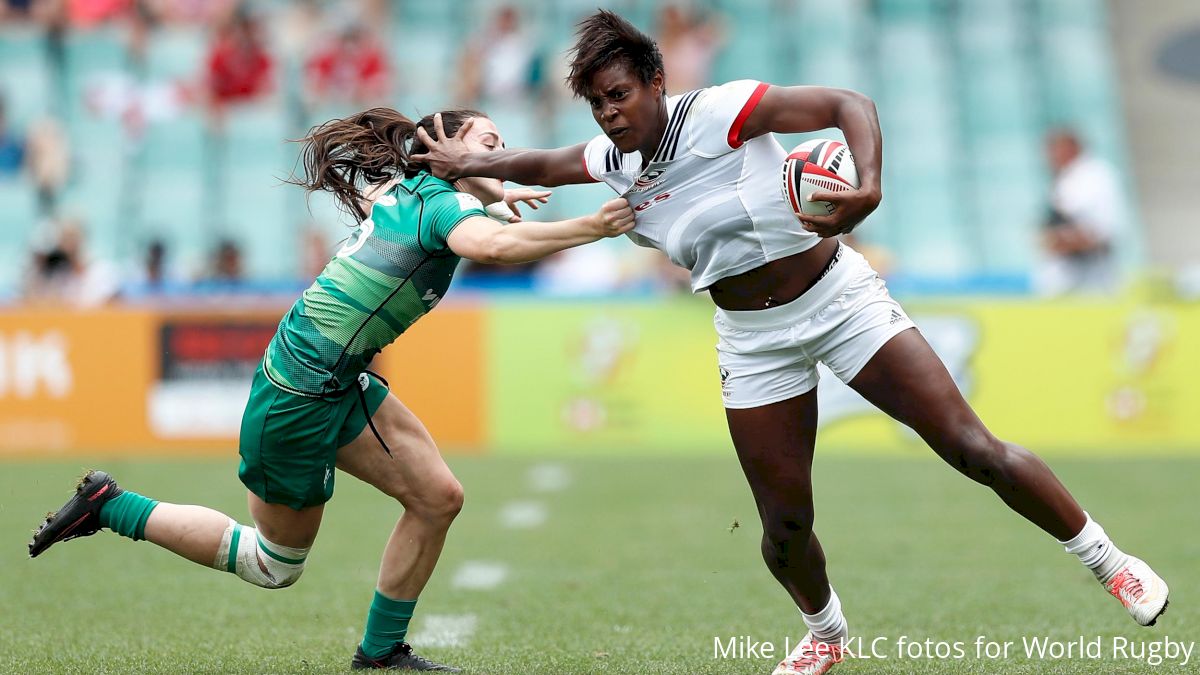
The USA women's sevens team finished eighth at the Sydney Sevens, losing 19-10 to Ireland in the seventh-place playoff on Sunday to cap off a somewhat disappointing run.
Overall, the Eagles went 1-5 but made the top eight thanks to a good points difference and a poor showing from England. The finish dropped the Eagles from second in the World Series standings to fifth. Here are our takeaways from the third stop on the series:
Playing 15s
What most people, including this writer, mean by "playing 15s" is when a team goes into contact too much during game. It means setting ruck after ruck and not looking wide until you're absolutely sure. This can be a harsh criticism on a team because one tends to label some especially physical play at "15s" when it's just physical play.
And we should recognize that everyone wants to find a way to commit defenders in the middle so there's space somewhere else. The Eagles women, however, have gone overboard. If getting tackled, releasing the ball, getting up, and regathering to run again worked once, players are trying it two, three, and four times. Not everyone — in fact almost no one — can get away with that.
The problem comes when this tactic works. It works by sucking in defenders. But as the defenders get sucked in, they are more effective in the tackle. There are more players there to slow ball presentation and more players who could force a penalty for not releasing.
So if you're going to play that way, you have to dominate the point of contact, or, better yet, stay vigilant. When you see lots of the opposition nearby, remember that someone else has a positive mismatch out wide.
More On 15s
You can imagine the conversation now: "Guys, just because I said we should engage defenders doesn't mean you should look for contact every time. If you have space, run to space. If someone else is in space, pass to her."
Passing
The USA passing is poor. The passes are flat to the runner, not leading the runner (pass for the player, not to the player). As a result, even the Eagles' most dangerous attackers are starting from a standstill. This is an easy fix and shouldn't be something we're complaining about with a national team.
More on Passing
If you're struggling to send quick, long passes out wide, you need to bunch people up, run loops and switches, and get players moving off the ball. The USA is not doing this enough.
Personnel
We were surprised to see Hope Rogers on this team, but Rogers, a big, bruising prop in 15s, was actually enormously effective playing that high-contact game. Kudos for that pick: Rogers and Cheta Emba seemed to be a good combination.
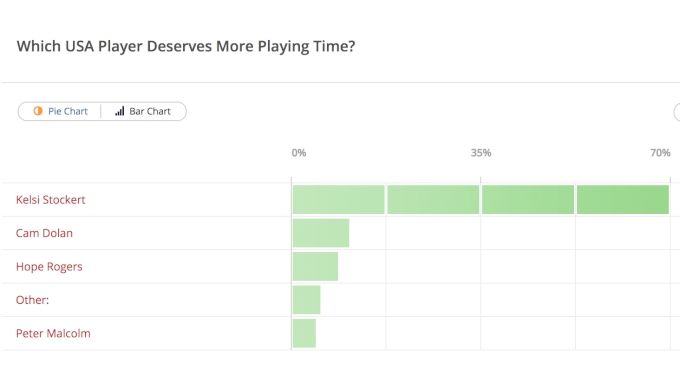
The decision to leave Kelsi Stockert at home is a puzzler, because she breaks tackles, works hard, and likes to play within a team dynamic. There are reasons why we don't go into this more deeply, but the readers agree.
They're Not That Far Away
The Eagles lost 28-24 to England, which was essentially a tie because it was four tries to four. They crushed Japan (which is not good) and failed to score against a New Zealand team that looked very strong (but also a team they beat in Dubai).
The USA also lost to Russia by five, Spain by five, and Ireland by nine. We outlined earlier the troubles against Russia and Spain, with the Spain loss being especially bone-headed.
But all of those games are close. A little change in tactics, a little more heads-up rugby, and maybe a tweak in the lineup, and you're winning those games.