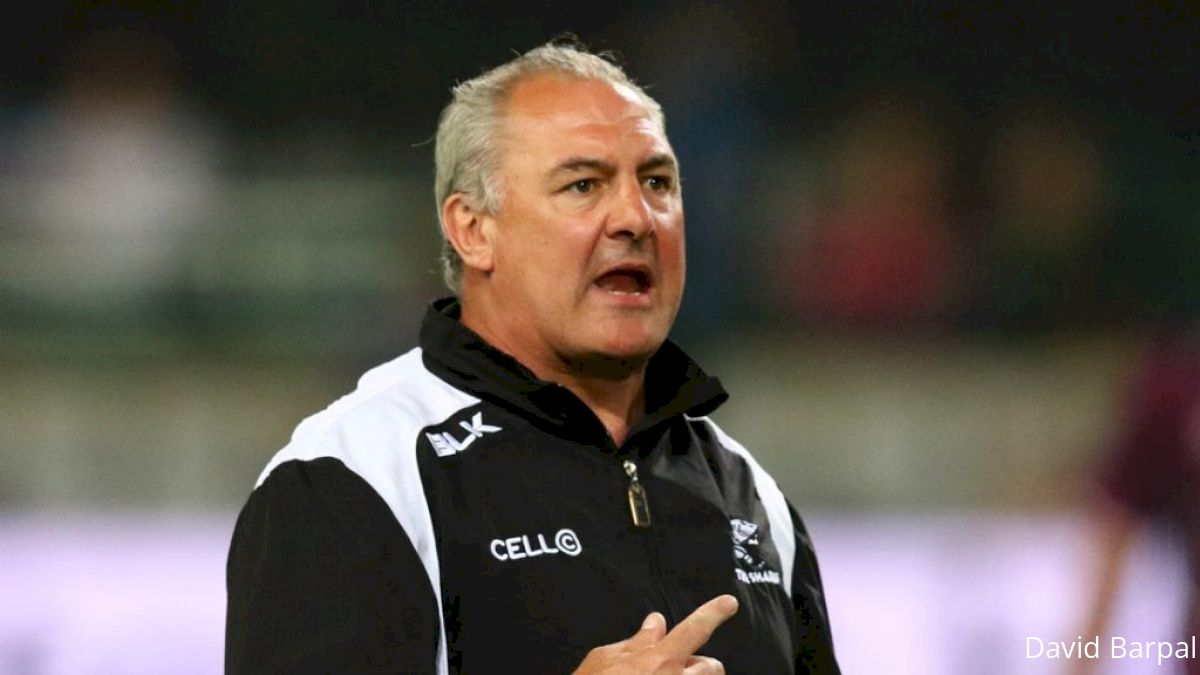
New USA men's 15s head coach Gary Gold sat down with FloRugby to talk about his desire to take on a challenging Eagles job and about his philosophy.
The 50-year-old South African was supposed to be a short-term director of rugby for the Worcester Warriors, but he was asked to stay on through the end of this season. Then in October he was named to the USA men's national team job, with the caveat that he wouldn't assume the role officially until the end of the Aviva Premiership season.
However, Worcester was able to find a replacement (former USA Rugby high performance head Alan Solomons), and as of January 1, Gold is now solely the USA head coach.
We spoke with Gold just a few days after his official assumption of the Eagles job.
FloRugby: Alan Solomons replaced you as director of rugby at Worcester. He was head of high performance at USA Rugby in 2006-07. Did you two talk about life in American rugby?
Gold: We did chat once or twice about it. He’s got a good understanding of the game and where it was a few years ago. He spoke highly about the potential. He spoke really highly about the organization, and about the huge opportunities that lie ahead at USA Rugby.
What attracted you to the job with the Eagles?
I think I would probably start off with that same point — the potential and how good the Eagles can be as a team. The game is growing quite substantially in the U.S. right now.
The thing you are going to be guaranteed is some really, really quality athletes and a nation that has a very good understanding of how to condition those athletes, across all sports. You’re still working with a sport that has so much potential. I know quite a few of the players and I’ve seen them play over the years, and it was a huge privilege to be offered an opportunity to get back into international rugby, particularly with a team that is going to be going to the World Cup.
So all in all it was a no-brainer for me. It wasn’t necessarily something I was looking for, but sometimes that’s how it works.
"I would say to this date that I have had very little input in terms of the selection."
You know some of the players, and you signed a couple. Joe Taufete’e has been a player at Worcester. Was there some unknown pressure on Joe to represent all U.S. players in front of the new Eagles head coach?
I hope there was pressure on him. Joe’s doing well. Up until a couple of weeks ago he was the leading try-scorer in the Premiership. He’s done well and is a very good example of the type of athletes that can be produced by the States. The fact that he’s in a full-time environment, he’s just going to improve week to week. I’m very fond of Joe.
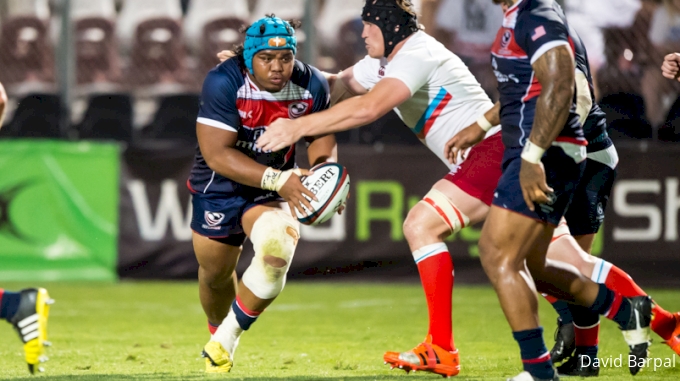
You have been in contact with the coaches and the management during the fall and leading up to the ARC. How much of a Gary Gold stamp was on the team that played in the fall, and how much of the ARC team is a Gary Gold team?
I would say very little at this stage. I am really relying on the expertise of people like Dave (Hodges) and Greg (McWilliams), and Dave Hewett when he was the (interim) head coach in Europe in the fall. I didn’t have enough knowledge to be able contribute to the team selection in the fall, and even now I am taking direction from guys who have been involved.
Scotty (Lawrence) took the team for one campaign. Greg’s been there before, Shawn (Pittman) has been there before. Dave Hodges has got a world of experience as well. I am very much relying on their expertise. They’re very thorough in what they’re doing, and they’ve got a good handle on the quality of the players.
I would say to this date that I have had very little input in terms of the selection. From my point of view, I feel it would be naive of me to offer opinions
That’s the way getting started in a professional environment works.
You are in a professional environment, but is it more like a national team, where most of the players have the same rugby background, or like a professional club, where players are from all over? You have a USA roster that has players playing in Europe, in the USA, in Australia and New Zealand, or just back from several years playing football.
It think that’s a good analogy. At this stage we’re a little bit more like a professional club — there’s certainly the different backgrounds like you would have in a professional team compared to certain national teams. We’re seeing a trend in countries like England and New Zealand where you have to be playing your rugby within the country to be selected.
In other countries they have requirements and then you reach a certain number of caps… and then that number changes.
With the USA it is a lot more like a professional team coming together. Our situation brings its challenges, but it’s not insurmountable. But obviously the USA being such a big country and a lot of players overseas in clubs, the challenge is away from training camp, where we need to keep a really good handle on these players and understand where they are.
When these players do come into assembly, what are they going to find out about you?
My approach is that time is absolutely of the essence. It’s our most precious commodity. A very, very clear message for the group and a very clear understanding of what we need to achieve as a group is critically important — even more so because we are so diverse and coming from overseas.
I’m hoping that one of the big messages will be about the clarity the players are going to get. Our plan will be simple but hopefully very effective. We will be putting our time and energy into making it as effective as possible.
Part of your agreement with USA Rugby is that outside of Eagles assemblies you will be working with coaches and being more of a teacher. Is that right?
Absolutely. Coaching is my passion, but sharing experiences and seeing young coaches coming up through the ranks is right up there. That’s not to say I know it all. I don’t think anyone does. But I have had contact with young coaches — dozens so far — in the U.S., and the enthusiasm level is through the roof.
You learn the nuances of the game through time and experience, and I am really excited about the coach development side of things.
Rugby is such an amazing game, and there are so many nuances that you’ve got to get right on the day. And I am not a person who keeps the information I have hidden. I’d be very keen to help USA Rugby in the development programs for the coaches, seminars for the coaches, maybe technically specific seminars on defense, or the attacking games, and it’s an exciting part of the job.
"We’ve got some technical goals in place and have a lot more focus on ourselves as a group and how we want to perform."
On the national team level, the USA team has been sometimes criticized for thinking just about tomorrow — next weekend — and not developing for the future. At the same time, we’ve also seen criticism for coaches who kind of throw away games — testing players and not worry about winning and that could undercut the desire to get into a winning habit.
These criticisms contradict each other somewhat. For you, the good news is you are taking over a team that has qualified for the World Cup. Does that mean you have time to ease your way toward Japan, or is this the time to create a unified squad that will play as a unit through 2019?
I don’t actually think we’ve got that long. I think we’ve got a particularly short period of time. We’ve got 12 tests this year, and then before you know it we’re playing in Japan.
In an ideal world you try to get as much of that group together on as many occasions as possible. But in saying that you’ve got to have a bit of balance, and the balance being that you want to also cast the net slightly wider and see if there are a couple of gems you don’t want to miss.
As you said, there’s also the expectation that you’ve got to win the [Americas Rugby Championship] or the next test match. The World Cup is important; you see it across the world. I don’t see it like that. I see it that we want to become a competitive squad. We’ve got some technical goals in place and have a lot more focus on ourselves as a group and how we want to perform. We have a slightly non-negotiable environment in that this is what we want to accomplish as a team.
And we have that clarity and then we try to build that squad of players, 30 to 35 players or maybe cast the net a little wider, but try and keep that group of players together through 2019. And if you can’t necessarily keep the entire group of players together, at least try and keep certain combinations together.
So if there’s a front row that’s playing particularly well and they complement each other — the tighthead’s a slightly better scrummager than the loosehead, but the loosehead carries a lot better and they work well as a unit, you try to keep them together.
So if you’re playing with a different halfback, that doesn’t necessarily matter because the front row has an opportunity to work together more.
It’s a tricky business. If you compare us to England, for example, I would bet that (England coach) Eddie (Jones) would be able to pencil in 26 out of the 28 names going to the World Cup already.
For us, you want to give players opportunities and cast the net, but you want to keep the balance right.