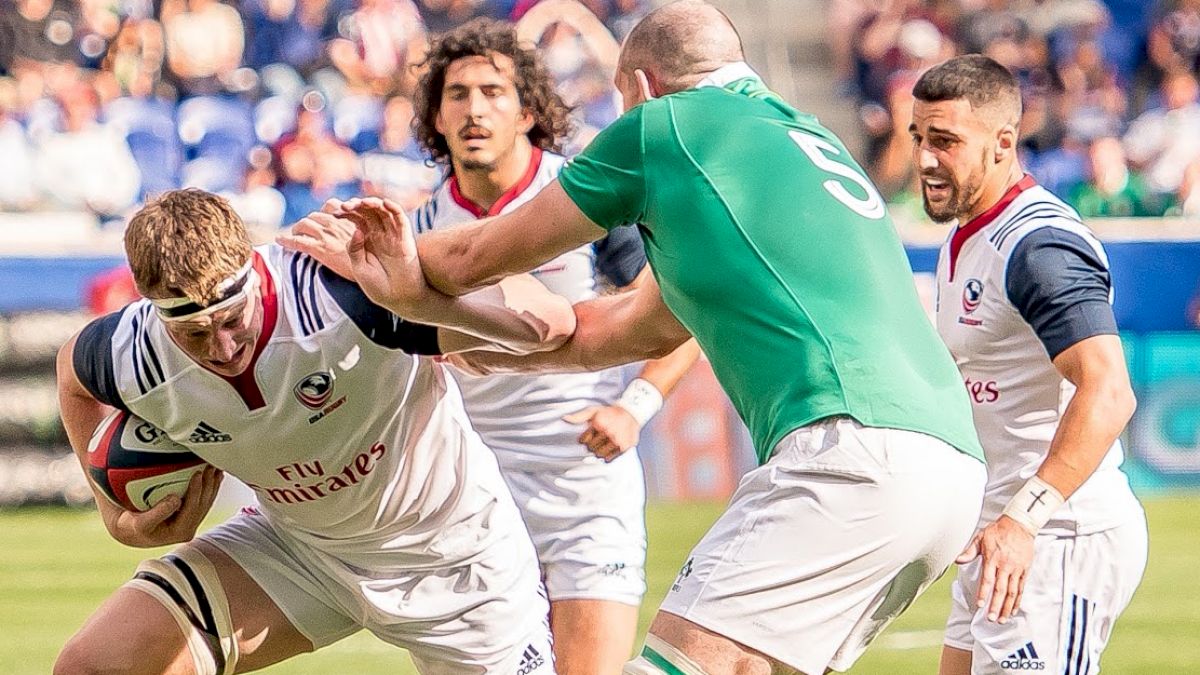
The USA men's national team's roster for the Americas Rugby Championship was named Thursday, and it raised some questions and thoughts as the competition gets underway later this month:
Not Homegrown
Of the 38 players named, 10 are playing rugby overseas at present, and nine (not all overlapping) learned most of their rugby overseas. A few other players were born overseas and came to the USA fairly young but had their initial grounding in the game abroad.
Or Maybe Yes Home-Grown
On the other hand, 21 players in the list played American high school rugby, and 23 played rugby in college in the U.S. Those don’t always overlap — five players played high school rugby but didn’t go on to college.
And 23 played in the USA High School All-American, U20, or Collegiate All-American programs.
Who Are These Guys?
Peni Tegiva is an Australian-born Rugby League player who qualified for and played League for Fiji. He retired from the sport in 2012 with an eye toward playing in the NFL and played running back at Baylor. He has now returned to rugby, playing sevens and training with the USA sevens team in Chula Vista, CA.
Will Hookey is a flyhalf who went through the Northampton Saints Academy system, played with the Exeter Chiefs, and is now with the Bedford Blues.
Are You Ready For Some Football?
Five players have significant football experience at the major college or professional level. Alex Elkins was a linebacker at Oklahoma State (his first taste of rugby was with the Alliance High School program in Texas); Peni Tagiva played running back at Baylor University; Psalm Wooching (pictured below) was a defensive back and linebacker for the University of Washington; Paul Lasike was recruited from BYU rugby to be a running back and fullback at BYU, and he later suited up for the Chicago Bears; Ben Landry had a long tryout as a tight end with the Seattle Seahawks.
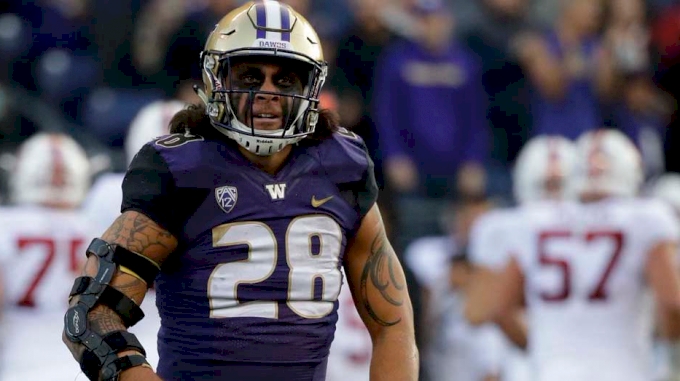
This harkens back to the 1980s and early 1990s when prominent football players were active in American rugby. The connection between the two sports split somewhat for a while, but there are enough athletes to go around.
One key element of this football crossover is the athletes’ background. These are not football players who took up rugby as adults. Lasike and Tagiva played some form of rugby as kids overseas. Elkins, Landry, and Wooching all played rugby at a high level as high schoolers.
Fast Track
Tagiva is really quite new to rugby union. Ruben de Haas was a High School All-American in 2016. Lasike and Psalm Wooching basically didn’t play rugby for four years and only recently returned to the sport. OK, that’s about it. The real fast-tracking is of overseas players who maybe aren’t that good. Will Hooley might be an excellent flyhalf, but he hasn’t spent any time in the USA setup. Patrick Ryan was capped fairly quickly this past summer, and you wonder if really this is the time for him to settle into the program.
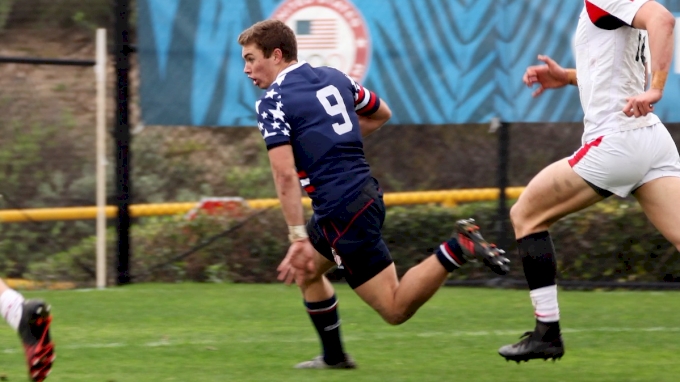
This kind of fast-tracking can backfire, but we’ve also seen players such as Marcel Brache and Tony Lamborn become valued and respected Eagles, so you never know.
As for some of the kind of unknowns (we know Elkins, but we haven't seen him at this level, really), most have been put at wing and flanker, which should allow them to make an impact and not have any mistakes cost too much.
The Position Spread
These are the numbers:
6 Props
4 Hookers
5 Locks
4 Flankers
2 No. 8s
4 Scrumhalves
3 Flyhalves
4 Centers
4 Wings
2 Fullbacks
Props and hookers are somewhat overrepresented (based on the fact you need two out of 15 on the field at any one time) and the halfbacks are, a little, as well.
What that tells is that some of these players won’t be available for the entire ARC and also that head coach Gary Gold is looking for something. Four hookers is a lot. Maybe there are some unanswered questions there.
Meanwhile, there’s solidity at center, while lock-flanker-No. 8 is somewhat interchangeable (Germishuys can play Nos. 6, 7, or 8; Landry and Brakeley can play lock and flanker; and Dolan can play anywhere from Nos. 4 to 8).
I do think there’s be some instability at scrumhalf. At times it seems Nate Augspurger has had the position sewn up, and then Shaun Davis takes over. It was no secret that former USA coach John Mitchell though de Haas was the No. 9 of the future. Four players at this position signals that the coach is looking for something.
At flyhalf it’s about looking for AJ MacGinty’s understudy. We talk about this more on our latest Miss Pass podcast.
Is This A Winning Roster?
Yeah, the Eagles for sure can win again. They are big and strong up front, and hopefully they continue to improve in the scrum. On attack we need to see something special, and perhaps the new coaching staff can unleash it.