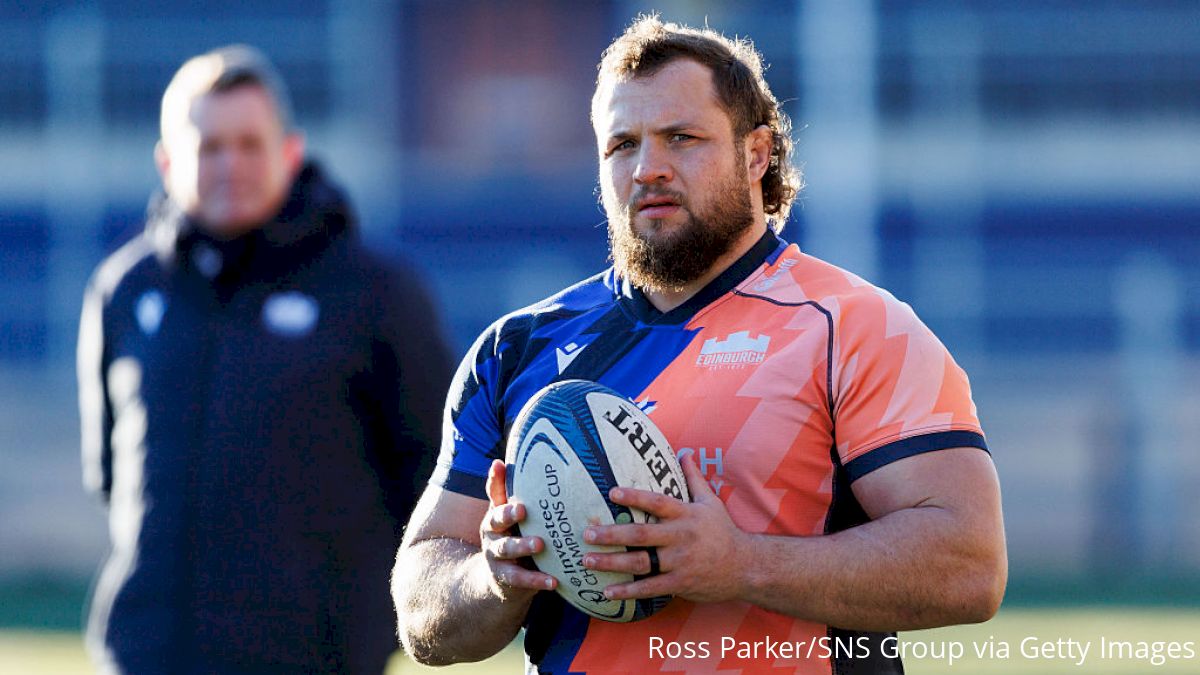
Edinburgh Rugby enter 2026-27 with a problem that is simultaneously encouraging and damning: their best team looks like a United Rugby Championship playoff team, but last season they played nothing like one.
The roster still contains Scotland internationals, British & Irish Lions pedigree, dangerous finishers and a front row capable of challenging serious opponents. Recruitment has strengthened the decision-making spine. Sean Everitt remains in charge, but Edinburgh have rebuilt much of the coaching structure around him to make the team faster, more direct and more aggressive.
- Subscribe To FloRugby To Watch Rugby All Season Long
- What's Streaming On FloRugby? Take A Look At The Schedule
- The Best Rugby Players In The World 2026
None of that erases 2025-26. Edinburgh finished 12th, went 0-9 against the eventual URC playoff field and were 2-7 away. Their problem was not beating weaker teams. It was surviving the jump in quality when the opposition became more physical, more precise and deeper.
That makes 2026-27 a season about proof. Edinburgh have enough talent. Now they must show their system can travel, survive international absences and beat teams they expect to join in the postseason.
What 2025-26 Told Us About Edinburgh Rugby
Edinburgh's 7-11 record and 38 points left them 12th, a sharp regression from the seventh-place finish and quarterfinal appearance of 2024-25. They scored 362 points, conceded 439 and finished with a minus-77 differential.
The most important numbers sit beneath the table. Edinburgh went 7-2 against teams that missed the playoffs, outscoring them 236-194. Against the eventual playoff eight, they went 0-9 and were outscored 245-126.
That split defines the challenge. Edinburgh could overwhelm Benetton 43-0, beat the Sharks 33-28 and produce a late three-match winning streak. Yet Glasgow swept them 24-12 and 21-3, the Lions routed them 54-17, and Connacht ended Edinburgh's season with a 26-5 win at a sold-out Hive Stadium.
Their road form was equally damaging. Edinburgh were 5-4 at home with a minus-6 differential, but 2-7 away with a minus-71 differential. Across the URC and Champions Cup, their meaningful road record was 2-10.
Europe offered some evidence of a higher ceiling. Edinburgh beat Toulon 33-20 and Gloucester 26-24, reached the Champions Cup Round of 16, then lost 49-31 at Leinster. But away defeats of 33-0 at Castres and 63-10 at Bath reinforced the same concern.
Injuries and Scotland availability hurt. They did not, however, explain everything. A squad with this much international quality cannot dismiss an 0-9 record against playoff opposition as misfortune.
Edinburgh Changed The Staff And Strengthened The Spine
Everitt is contracted through 2027-28, so Edinburgh responded to regression by changing the structure beneath him. Tim Sampson takes the attack, Brad Davis the defense, Stevie Lawrie remains forwards coach, and Michael Hodge has arrived to focus on skills and contact.
The tactical message is clear. Everitt acknowledged Edinburgh were “pretty slow” last season. The intended correction is faster ball, more direct attack and more aggressive defensive line speed.
Recruitment matches that diagnosis. James Grayson gives Edinburgh an experienced fly-half and game-management option. Louie Chapman arrives from the Crusaders/Canterbury pathway to challenge at scrum-half. Riley Higgins, a 23-year-old Hurricanes centre, is the marquee midfield addition. Alec Hepburn reinforces loosehead, while Kienan Higgins and Geordie Gwynn add midfield and back-three options.
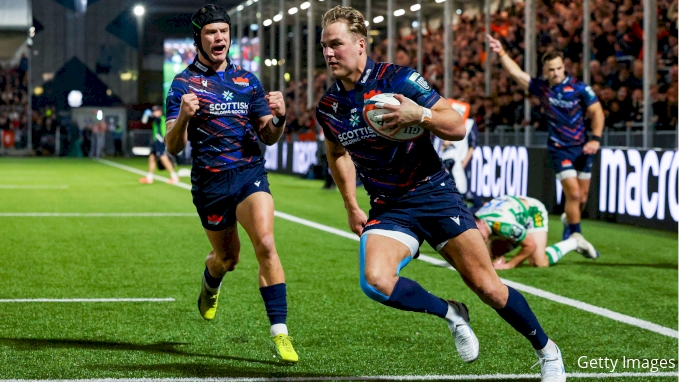
The complication is timing. Chapman and Riley Higgins are not due until late November, and Higgins is recovering from shoulder surgery. Edinburgh also entered September with 13 injured players, including Duhan van der Merwe, Grant Gilchrist, Ewan Ashman and Ben Vellacott among the consequential cases.
The departures matter, too. Boan Venter, Hamish Watson, James Lang, Charlie Shiel, Ben Healy and Sam Skinner are among nine senior exits. Venter is arguably the largest immediate performance loss, while Skinner's departure leaves the second row thinner.
The net verdict is roughly neutral in proven, immediately available senior quality, but potentially positive by December. Edinburgh targeted real weaknesses rather than collecting names. Whether they improved depends on Grayson, Chapman and Riley Higgins changing how the team functions.
Edinburgh Rugby Projected Starting XV For 2026-27
This is a projection of Edinburgh's strongest healthy, post-November Matchday 23, not an announced lineup or a Round 1 selection.
- Loosehead Prop — Pierre Schoeman
- Hooker — Ewan Ashman
- Tighthead Prop — Paul Hill
- Lock — Grant Gilchrist
- Lock — Marshall Sykes
- Blindside Flanker — Luke Crosbie
- Openside Flanker — Freddy Douglas
- No. 8 — Magnus Bradbury
- Scrum-Half — Ben Vellacott
- Fly-Half — James Grayson
- Left Wing — Duhan van der Merwe
- Inside Center — Mosese Tuipulotu
- Outside Center — Riley Higgins
- Right Wing — Darcy Graham
- Fullback — Harry Paterson
Projected Bench
- Dylan Richardson
- Alec Hepburn
- D'Arcy Rae
- Glen Young
- Ben Muncaster
- Louie Chapman
- Ross Thompson
- Wes Goosen
The hardest calls demonstrate Edinburgh's upside. Thompson can legitimately start at fly-half. Chapman could displace Vellacott after acclimatizing. Muncaster can start at No. 8 and shift Bradbury to blindside. Rae can challenge Hill, while Matt Currie could force his way into either centre spot.
Piers O'Conor, James Whitcombe, Callum Hunter-Hill, Kienan Higgins and Gwynn also miss this projection. Healthy, that is meaningful depth. The problem is how quickly it thins when Scotland call-ups and injuries hit simultaneously.
Back row and loosehead are the strongest depth areas. Hooker, scrum-half and lock carry greater risk, particularly early.
The Players Who Make Edinburgh Go
Pierre Schoeman is the best candidate for Edinburgh's best all-around player. His scrummaging gives them a platform, his carrying adds directness and his Test-level experience makes him foundational to the kind of physical game Edinburgh need.
Ewan Ashman may be even more structurally important. He was Player of the Match in each of Edinburgh's three victories during their late-season winning streak. His influence spans scrum, lineout, carrying and defense, while Patrick Harrison's absence until around January makes the depth behind him less secure.
Vellacott matters because the new attack depends on tempo. His shoulder surgery will keep him out at the start, Shiel has departed and Chapman will not arrive until late November. Until the scrum-half room stabilizes, Edinburgh are asking young Conor McAlpine and Hector Patterson to handle important minutes.
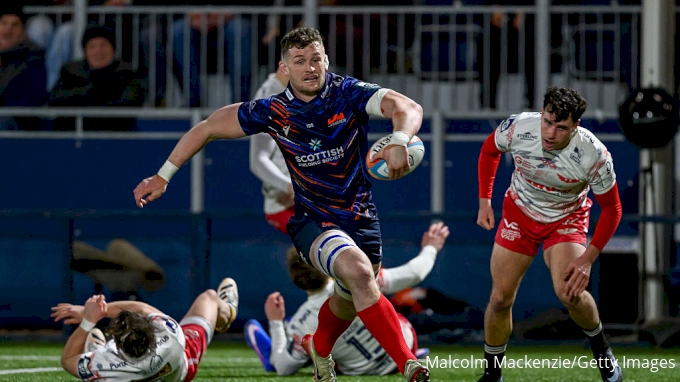
Grayson could be the offseason addition with the greatest immediate effect. Edinburgh lost by one point at Munster, one at Cardiff and two against the Bulls. They need their fly-half to control territory and make better late-game decisions when margins shrink.
Bradbury remains the incumbent captain, primary carrier and stabilizing back-row presence. Douglas supplies disruptive breakdown ability and could establish himself as a regular first-choice openside.
Then there are the finishers. Graham is Edinburgh's most dangerous pure strike runner, while van der Merwe can convert small advantages into tries. The purpose of the faster attack is ultimately to give players like them chances against disorganized defenses.
Riley Higgins is the upside variable. If his Hurricanes pedigree translates after his late arrival, Edinburgh may have added a young centre capable of giving their attack a creative focal point it lacked.
How Edinburgh Rugby Want To Win
Edinburgh's intended identity is more specific than simply playing faster. They want a stable platform from a powerful front row, mobile back-row carriers producing quick ruck ball, rapid service from scrum-half and decisive choices at 10 between attacking space and taking territory.
That structure should create one-on-one opportunities for Graham, van der Merwe and the other back-three runners. Hodge's contact work is designed to improve ball speed and continuity, while Sampson wants Edinburgh to become more ruthless when attacking promising areas.
Defensively, Davis is charged with making Edinburgh less passive. More aggressive line speed should prevent opponents from comfortably setting tempo and building phases on their terms.
- 10 Must-Watch United Rugby Championship Matches In 2026-2027
- Scotland's URC Contenders Reload For 2026-27 As Glasgow, Edinburgh Reshape Their Squads
- Every Scottish Shield Match On The 2026-2027 United Rugby Championship Schedule
The front row gives the plan credibility. Schoeman and Ashman are high-end URC players, Hill and Rae offer experienced tighthead options, and Hepburn and Whitcombe make loosehead unusually deep.
The back row may be deeper still. Bradbury, Crosbie, Muncaster, Douglas and Richardson offer carrying, physicality, breakdown pressure and flexibility, with another wave of younger options behind them.
The vulnerabilities sit through the middle of the spine. Gilchrist and Sykes form a credible first-choice lock pairing, but Skinner is gone and Gilchrist enters the season injured at 36. At scrum-half, the player responsible for accelerating Edinburgh's new attack begins the year as the greatest uncertainty.
The formula can work. The question is whether it still works when Edinburgh face Leinster, Glasgow and the leading South African packs, or when several Scotland internationals disappear.
Why Edinburgh Can Succeed — And What Could Stop Them
The playoff case begins with top-end quality. Edinburgh can field a front row that belongs in the postseason, one of their deepest back-row groups, two elite strike wings and a more convincing collection of halfback and midfield options once the late arrivals are integrated.
Their recruitment also attacks causes rather than symptoms. Grayson addresses game management. Chapman addresses scrum-half depth and succession. Riley Higgins adds creativity. Hepburn helps replace Venter. Six academy players moving onto professional contracts offer a longer-term answer to depth.
There is also a plausible path through the schedule. The opening five URC rounds are difficult while Edinburgh are depleted, and the March trip to the Sharks and Bulls is severe. But three of the final four fixtures are home games against Cardiff, Zebre and Munster, with the other against Glasgow at Hampden.
- Top 50 Rugby Union Prospects 2026: No. 10-1
- Top 50 Rugby Union Prospects 2026: No. 20-11
- Top 50 Rugby Union Prospects 2026: No. 35-21
- Top 50 Rugby Union Prospects 2026: No. 50-36
The Challenge Cup presents another opportunity. Edinburgh reached its semifinal in 2024-25 and enter Pool 3 with Toulon, Harlequins, RC Vannes, Black Lion and Ospreys, though they will not play Ospreys in the pool phase. A meaningful knockout run is realistic.
What could stop them is familiar. International absences can remove a large portion of the first-choice side. Injuries already have. Hooker, scrum-half and lock depth can become uncomfortable quickly.
Most importantly, Edinburgh have not earned the assumption that their best rugby travels. Last season's minus-71 away differential and 0-9 record against playoff teams are not cosmetic flaws. They are evidence that better opponents exposed Edinburgh's defensive consistency, game management and depth.
That is the most plausible route to another disappointment: the new system looks impressive against manageable opposition but breaks under playoff-level pressure.
Edinburgh Rugby 2026-27 Outlook
Edinburgh should expect to make the playoffs. That does not mean they should be predicted as a playoff lock.
The proven title tier begins above them with Leinster, Glasgow, Bulls and Stormers. Edinburgh enter closer to the playoff bubble, with a reasonable preseason range around eighth to 10th and a broader plausible finish between sixth and 12th.
Top six is credible if the coaching changes translate quickly, the halfback combinations settle and the road record improves. A favorable quarterfinal could make a URC semifinal realistic. A championship remains a dark-horse outcome because Edinburgh have not demonstrated the 1-through-23 consistency or away performance of the league's best teams.
The 1872 Cup matters within that test. Glasgow won both meetings last season and remains the benchmark for turning Scottish talent into a club system. Edinburgh need not copy Glasgow, but beating their rival and competing through Test windows would provide evidence that this rebuild is working.
Success should mean a playoff berth, wins over several top-eight-caliber opponents, visible road improvement and a competitive Challenge Cup campaign. Top six plus a URC or Challenge Cup semifinal would represent a very good season. Another 11th- or 12th-place finish would be failure.
The biggest reason for optimism is that Edinburgh identified their actual problems and recruited and coached toward them. The biggest concern is availability: the roster they hope will reach the playoffs is not the roster opening the season.
Edinburgh do not lack talent. They lack proof. Their best 23 looks postseason caliber, but 2026-27 will be decided by whether Everitt's rebuilt staff can make that quality repeatable in Belfast, Galway, South Africa and Glasgow, and whether the system survives when Scotland takes its share of the squad. Until Edinburgh answer those questions, the distance between the names on their team sheet and the results on the table remains the defining story.
Edinburgh Rugby 2026-27 Schedule: Every URC And Challenge Cup Match
Edinburgh Rugby 2026-27 URC Schedule
- Round 1: Ulster vs. Edinburgh Rugby, Sept. 25, 2026
- Round 2: Edinburgh Rugby vs. Stormers, Oct. 2, 2026
- Round 3: Zebre Parma vs. Edinburgh Rugby, Oct. 10, 2026
- Round 4: Edinburgh Rugby vs. 10Bet Lions, Oct. 23, 2026
- Round 5: Benetton Rugby vs. Edinburgh Rugby, Oct. 31, 2026
- Round 6: Edinburgh Rugby vs. Dragons RFC, Dec. 4, 2026
- Round 7: Connacht Rugby vs. Edinburgh Rugby, Dec. 19, 2026
- Round 8: Edinburgh Rugby vs. Glasgow Warriors, Dec. 27, 2026
- Round 9: Edinburgh Rugby vs. Benetton Rugby, Jan. 2, 2027
- Round 10: Ospreys vs. Edinburgh Rugby, Jan. 23, 2027
- Round 11: Scarlets vs. Edinburgh Rugby, Jan. 30, 2027
- Round 12: Edinburgh Rugby vs. Leinster Rugby, Feb. 27, 2027
- Round 13: Hollywoodbets Sharks vs. Edinburgh Rugby, March 19, 2027
- Round 14: Bulls vs. Edinburgh Rugby, March 27, 2027
- Round 15: Edinburgh Rugby vs. Cardiff Rugby, April 16, 2027
- Round 16: Glasgow Warriors vs. Edinburgh Rugby, April 24, 2027
- Round 17: Edinburgh Rugby vs. Zebre Parma, May 7, 2027
- Round 18: Edinburgh Rugby vs. Munster Rugby, May 14, 2027
Edinburgh Rugby 2026-27 Challenge Cup Pool Schedule
- Challenge Cup Round 1: Edinburgh Rugby vs. Toulon, Oct. 16, 2026
- Challenge Cup Round 2: RC Vannes vs. Edinburgh Rugby, Dec. 13, 2026
- Challenge Cup Round 3: Edinburgh Rugby vs. Harlequins, Jan. 9, 2027
- Challenge Cup Round 4: Black Lion vs. Edinburgh Rugby, Jan. 17, 2027
Edinburgh Rugby 2026-27 Frequently Asked Questions
How Can Rugby Fans In The United States Watch Edinburgh Rugby On FloRugby?
Rugby fans in the United States can watch Edinburgh Rugby throughout the 2026-27 season on FloRugby, with matches also available to stream through the FloSports app.
What League Do Edinburgh Rugby Play In?
Edinburgh Rugby play in the United Rugby Championship, which features professional teams from Scotland, Ireland, Wales, Italy and South Africa.
Where Did Edinburgh Rugby Finish In The 2025-26 URC?
Edinburgh finished 12th in the 2025-26 URC with a 7-11 record and 38 points. They scored 362 points, conceded 439 and missed the playoffs one year after finishing seventh.
Who Is The Edinburgh Rugby Head Coach?
Sean Everitt is Edinburgh Rugby's head coach. He signed a two-year extension in January 2026 that keeps him under contract through the end of the 2027-28 season.
Who Is On The Edinburgh Rugby Coaching Staff?
Tim Sampson leads the attack, Brad Davis leads the defense, Stevie Lawrie remains forwards coach and Michael Hodge joined as skills and contact coach ahead of the 2026-27 season.
Who Is The Edinburgh Rugby Captain?
Magnus Bradbury was Edinburgh's captain throughout 2025-26 and re-signed for another season.
Where Do Edinburgh Rugby Play Their Home Matches?
Edinburgh Rugby play primarily at Hive Stadium, the club's roughly 7,800-capacity ground within the Murrayfield complex. Higher-demand fixtures can move to Scottish Gas Murrayfield, including Edinburgh's Dec. 27 match against Glasgow Warriors.
What European Competition Are Edinburgh Rugby Playing In?
Edinburgh are competing in the 2026-27 EPCR Challenge Cup after finishing outside the URC top eight. They are in Pool 3 with Harlequins, Toulon, RC Vannes, Black Lion and Ospreys.
When Does Edinburgh Rugby's 2026-27 URC Season Start?
Edinburgh open the 2026-27 URC season away against Ulster on Sept. 25, 2026.
How Did Edinburgh Rugby Perform In Europe In 2025-26?
Edinburgh went 2-2 in their Champions Cup pool, finished fourth in Pool 2 with 10 points and reached the Round of 16. Their European run ended with a 49-31 loss to Leinster at Aviva Stadium.
Did Edinburgh Rugby Make The 2026 URC Playoffs?
No. Edinburgh finished 12th and missed the postseason. Most concerningly, they went 0-9 against the eight clubs that eventually reached the URC playoffs.
Who Are Some Edinburgh Rugby Players To Know In 2026-27?
Pierre Schoeman, Ewan Ashman, Magnus Bradbury, Darcy Graham and Duhan van der Merwe are among Edinburgh's most important established players. James Grayson, Louie Chapman and Riley Higgins are important additions, while Freddy Douglas is one of the club's most promising young players.
Who Did Edinburgh Rugby Sign For 2026-27?
Edinburgh's additions include James Grayson, Riley Higgins, Louie Chapman, Alec Hepburn, Geordie Gwynn and Kienan Higgins. Grayson strengthens fly-half, Chapman adds competition at scrum-half and Riley Higgins is the marquee midfield signing.
Who Left Edinburgh Rugby Before The 2026-27 Season?
Edinburgh confirmed nine senior departures: Hamish Watson, Boan Venter, James Lang, Charlie Shiel, Ben Healy, Sam Skinner, Angus Williams, Ross McCann and Mikey Jones. Venter represents one of the most significant immediate losses, while Skinner's departure reduces experienced second-row depth.
What Is The Biggest Question Facing Edinburgh Rugby In 2026-27?
Whether Edinburgh can finally beat playoff-quality opposition. They went 7-2 against non-playoff teams in 2025-26 but 0-9 against the eventual playoff eight, with a 126-245 aggregate score in those nine defeats.
What Is Changing About The Edinburgh Rugby Attack?
Edinburgh want to play faster and more directly after Everitt acknowledged the team was too slow in 2025-26. Sampson's attack and Hodge's work around skills and contact are intended to improve ball speed, continuity and Edinburgh's ability to attack space before defenses become organized.
What Is The 1872 Cup?
The 1872 Cup is the trophy contested between Edinburgh and Glasgow Warriors in their historic Scottish rivalry. The designated derby matches also count toward the URC standings. Edinburgh host Glasgow at Scottish Gas Murrayfield on Dec. 27 before the second meeting at Hampden Park on April 24.
Are Edinburgh Rugby A URC Championship Contender In 2026-27?
Edinburgh should be considered a playoff contender rather than a preseason championship favorite. Our deep-dive into the season places them around eighth to 10th entering the season, with a broader plausible range of sixth through 12th. A semifinal is a realistic upside outcome if they improve significantly against top opposition and away from home.
Who Is The Edinburgh Rugby Player To Watch In 2026-27?
Pierre Schoeman is the Edinburgh's best all-around player, while Ewan Ashman may be their most structurally important. Riley Higgins is the major upside signing, and Freddy Douglas is one of the most important young players to follow.