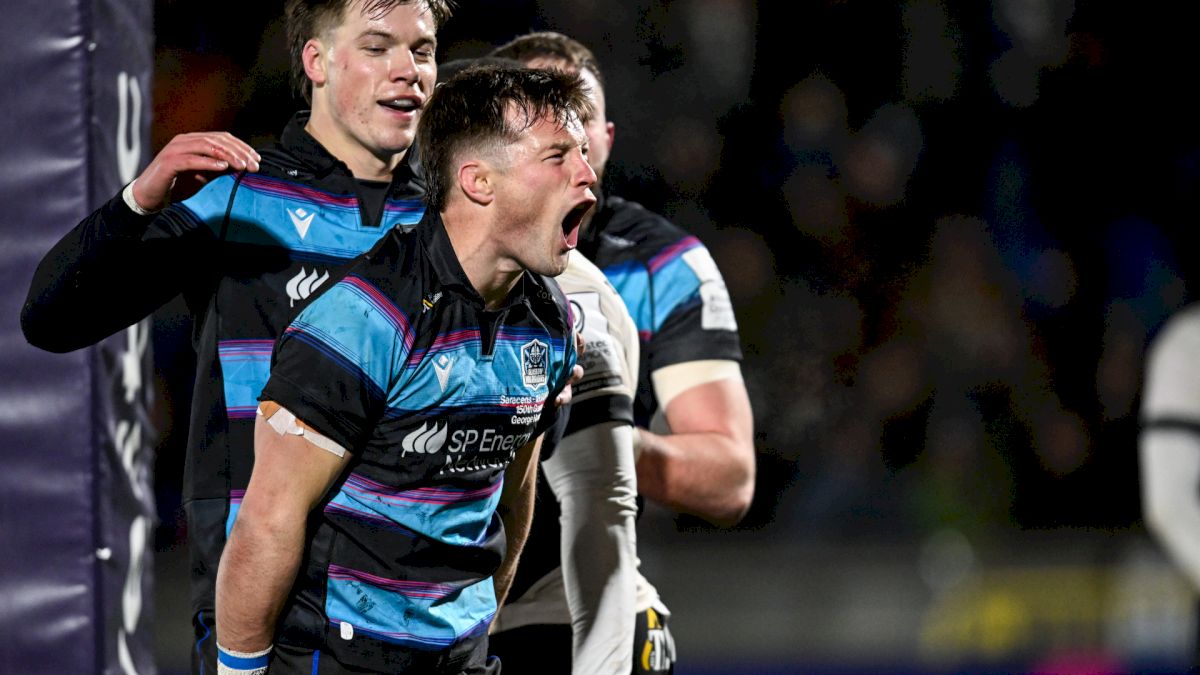
Glasgow Warriors enter 2026-27 with a strange combination of proof and uncertainty. They do not need to establish that Franco Smith’s rugby can win championships; the 2024 title already did that.
They do not need to prove they can dominate a regular season, either. Glasgow finished first in the United Rugby Championship in 2025-26, owned the league’s best defensive record and swept a difficult Champions Cup pool.
What they must prove now is that the machine can survive a significant rewiring.
- Subscribe To FloRugby To Watch Rugby All Season Long
- What's Streaming On FloRugby? Take A Look At The Schedule
- The Best Rugby Players In The World 2026
Huw Jones, Adam Hastings, Jack Dempsey and Johnny Matthews are among the major departures. Jamie Ritchie headlines a group of additions that also includes Ruwald van der Merwe and Bayley Kuenzle, while a club-record nine academy graduates have stepped into professional contracts. The result is a roster that may be deeper numerically but is less proven in several positions that decide knockout matches.
That matters because knockout matches became Glasgow’s unresolved problem. Their European season ended by three points. Their URC season ended by one after they led the Bulls 21-3.
Glasgow remain championship class. The question is whether a changed team can become more clinical when championship moments arrive.
What 2025-26 Told Us About Glasgow Warriors
The most revealing thing about Glasgow’s 13-5 regular season was not simply that it produced 65 points and first place. It was how differently the Warriors looked depending on where they played.
At home, Glasgow were perfect: 9-0, with 316 points scored and 119 conceded. Away, they went 4-5 and were outscored 219-163. That contrast became impossible to ignore during a South African trip in April, when the Lions beat Glasgow 54-12 and the Stormers followed with a 48-12 victory.
Yet Glasgow’s best performances were legitimately elite. They beat Leinster 38-17 at Scotstoun and finished the regular season with 72 tries while allowing a league-low 338 points. They retained the Scottish-Italian Shield and secured the No. 1 playoff seed.
- 10 Must-Watch United Rugby Championship Matches In 2026-2027
- Scotland's URC Contenders Reload For 2026-27 As Glasgow, Edinburgh Reshape Their Squads
- Every Scottish Shield Match On The 2026-2027 United Rugby Championship Schedule
Europe reinforced the same message. Glasgow went 4-0 in the Champions Cup pool, beating Sale, Toulouse, Clermont and Saracens, then eliminated the Bulls 25-21. Toulon ended the run 22-19 in the quarterfinal after Glasgow had taken a second-half lead.
The URC ending hurt more. Glasgow beat Connacht 33-21 in the quarterfinal, then raced 21-3 ahead against the Bulls in the semifinal before losing 22-21.
The lesson was not that Glasgow lacked championship quality. It was almost the opposite. Their quality made the endings more frustrating. They had already done enough to earn advantageous knockout positions. What they lacked was the late-game precision to convert them.
Glasgow’s High-Stakes Offseason Retool
Calling this a rebuild would undersell what remains. Smith is contracted through 2028. Kyle Steyn remains captain. Sione Tuipulotu, Rory Darge, Zander Fagerson, Scott Cummings, Matt Fagerson and George Horne still form a formidable core.
But the exits are substantial.
Jones removes elite line-breaking from outside center. Hastings takes away Glasgow’s most experienced established fly-half and an important goal-kicking option. Dempsey leaves a major carrying workload behind. Matthews, who scored 51 tries for Glasgow, takes away a remarkably productive hooker and maul finisher. Jamie Bhatti, Sione Vailanu, Duncan Weir and Grant Stewart also departed.
- Top 50 Rugby Union Prospects 2026: No. 10-1
- Top 50 Rugby Union Prospects 2026: No. 20-11
- Top 50 Rugby Union Prospects 2026: No. 35-21
- Top 50 Rugby Union Prospects 2026: No. 50-36
Ritchie is the most consequential arrival. The former Scotland captain adds breakdown quality, leadership and enough high-level experience to soften Dempsey’s loss. Van der Merwe adds 110 kilograms of back-row power after captaining the Pumas, while Kuenzle can cover fly-half, both center positions, wing and fullback.
The youth movement is equally important. Nine academy players earned professional deals, the largest graduating class in club history. That matters for a club whose roster can be stripped heavily by Scotland duty.
Glasgow probably became deeper in developmental options while becoming less certain at the top of the depth chart. The forwards still look championship caliber. The biggest questions sit at 10, 13 and hooker.
Glasgow Warriors Projected Starting XV For 2026-27
This is a FloRugby projection, not an announced lineup.
- Loosehead Prop — Patrick Schickerling
- Hooker — Gregor Hiddleston
- Tighthead Prop — Zander Fagerson
- Lock — Scott Cummings
- Lock — Max Williamson
- Blindside Flanker — Jamie Ritchie
- Openside Flanker — Rory Darge
- No. 8 — Matt Fagerson
- Scrum-Half — George Horne
- Fly-Half — Dan Lancaster
- Left Wing — Kyle Rowe
- Inside Center — Sione Tuipulotu
- Outside Center — Stafford McDowall
- Right Wing — Kyle Steyn
- Fullback — Josh McKay
Projected Bench
- Seb Stephen
- Rory Sutherland
- Fin Richardson
- Alex Samuel
- Gregor Brown
- Jamie Dobie
- Bayley Kuenzle
- Ollie Smith
Loosehead is genuinely competitive, with Nathan McBeth and Sutherland capable of starting. Williamson versus Samuel is another close call at lock. Fullback could shift among McKay, Smith and Rowe.
Fly-half is different because the uncertainty carries greater strategic importance. Lancaster gets the projection because Smith trusted him at 10 in last season’s URC quarterfinal, but Charlie Savala, Matthew Urwin and Kuenzle provide alternatives.
The strongest depth is at lock and back row. The concern is not the number of options at fly-half or outside center; it is whether any can reproduce the elite experience Glasgow lost.
The Players Who Make Glasgow Warriors Go
Tuipulotu becomes even more important without Jones beside him. His combination of power and distribution allows Glasgow to create without making the fly-half responsible for every attacking decision. With a new 10 hierarchy and a changed outside-center partnership, Scotland’s captain is the stabilizer around whom the backline can be rebuilt.
Horne gives Glasgow something different at scrum-half: a nine who is also a serious finishing threat. His club profile entering the season lists 66 tries in 156 appearances. That scoring instinct changes how defenses must police the fringes and support runners.
Darge remains central to the defensive identity. His turnover ability, tackling and leadership make him more than an openside selected to chase breakdowns. Pairing him with Ritchie could give Glasgow an especially disruptive combination around contact.
Zander Fagerson is the scrum anchor, while Cummings gives the second row proven international quality and lineout authority. Their presence is important because Glasgow’s best path through roster transition is to ensure the forward platform does not regress while the backline changes.
Then there is Lancaster. He is not the biggest star, but no player may have a greater opportunity to alter Glasgow’s ceiling. If he can provide control, distribution and reliable pressure management at 10, the Warriors can absorb Hastings’ exit more smoothly. If fly-half remains unsettled, every tight knockout finish becomes more complicated.
How Glasgow Warriors Win Matches
Glasgow’s identity starts with defense, not highlight-reel attack. They conceded 338 points across the 2025-26 regular season, the best total in the league, and allowed 48 tries.
The personnel supports an aggressive collision-and-breakdown game. Darge attacks ball on the floor, Ritchie adds another experienced breakdown presence, and the pack contains international power through Fagerson, Cummings and Matt Fagerson.
But Glasgow are dangerous because that defensive foundation can feed an attack built for tempo. Horne accelerates play and threatens around rucks. Tuipulotu can win contact or distribute. McDowall offers size and a left-footed kicking option. Rowe and McKay can punish transition opportunities.
View this post on Instagram
Against Toulouse last season, Glasgow demonstrated that they can also impose themselves through sustained possession: 58% possession, 54% territory, 489 meters carried and 96% ruck retention in a 28-21 victory. That was one match, not a season-long template, but it showed the range available to Smith’s side.
The question is what happens without Jones’ acceleration outside Tuipulotu and without Hastings’ experience at 10. McDowall creates a different midfield profile, and Glasgow enter the season without a reliably verified first-choice goal-kicking hierarchy.
Their lineout retains considerable height, but Matthews’ departure puts pressure on Hiddleston and Stephen to preserve the hooker contribution to the lineout and maul.
The system still makes sense. Its pressure points have changed.
Why Glasgow Warriors Can Win The United Rugby Championship Final
The strongest argument for Glasgow is simple: most of what made them the URC’s best regular-season team remains.
Smith remains. The defensive core remains. The forward pack is loaded with internationals. Scotstoun remains a major advantage after Glasgow went 9-0 there in regular-season league play. The back row may be the deepest unit in the squad even after Dempsey’s departure, because Ritchie joins Darge and Matt Fagerson with Brown, Euan Ferrie, Macenzzie Duncan, van der Merwe, Angus Fraser and Ally Miller providing alternatives.
View this post on Instagram
The academy pipeline also gives Glasgow a better chance of surviving international windows. Seb Stephen has an immediate opening at hooker. Fergus Watson already produced a try and Player of the Match performance on senior debut. Johnny Ventisei has a pathway at outside center, while Urwin enters a fly-half depth chart with room to move.
This is not a fading contender trying to squeeze out one last run. Glasgow still have a championship spine and enough younger talent to evolve around it.
What Could Stop Glasgow?
The clearest danger is that the backline transition costs Glasgow precision exactly where last season showed they needed more of it.
Jones and Hastings played different positions, but together their departures remove line-breaking, experience, decision-making and kicking. Glasgow have credible replacements. They do not yet have proof those replacements can deliver the same level in a Champions Cup quarterfinal or URC semifinal.
International availability creates another stress point. Scotland selected 19 Glasgow players in its June 2026 Nations Championship squad, although Dempsey has since departed. Ritchie adds another established international to the current roster. Glasgow’s academy depth is therefore not optional luxury; it may decide league matches.
Then there is the road issue. Glasgow were 4-5 away last season, and their final two 2026-27 URC matches are at the Bulls and Sharks. A team that was demolished twice in South Africa last April could have home playoff seeding riding on another South African trip.
Most importantly, Glasgow must close knockout matches better. Losing to Toulon after leading in the second half and to the Bulls after leading by 18 does not establish a permanent flaw. It does establish the most obvious place to improve.
Glasgow Warriors 2026-27 Outlook
Glasgow enter the season as a genuine URC title contender, but another first-place finish should not be assumed. A realistic regular-season range is second through fifth, with a home playoff and serious semifinal contention the appropriate baseline. A quarterfinal exit would disappoint. Missing the playoffs would be a major failure.
In Europe, knockout qualification should be expected after last season’s 5-1 run. Sale away, Section Paloise and Leicester at home, and Clermont away form the pool schedule. Another quarterfinal is realistic, and a semifinal lies within Glasgow’s ceiling if they earn favorable seeding and become better closers.
The schedule will test that retool in ways. Glasgow open the URC at Munster, face a dense December-to-January stretch across league and European competition, and finish with the Bulls and Sharks away. That makes consistency more valuable than one run. Last season Glasgow could overwhelm Leinster at home, win at Clermont and suffer two heavy South African defeats. For a side chasing a top-four seed, reducing those swings matters.
The 1872 Cup remains meaningful after Glasgow swept Edinburgh last season, with the 2026-27 deciding leg moving to Hampden. Glasgow’s depth will have to function across every phase of that calendar.
The biggest reason for optimism is that the hardest part of building a contender already exists: Glasgow have a proven coach, elite defensive evidence, a deep international forward core and a home ground where they were perfect last season.
The biggest concern is whether the new spine around Lancaster and McDowall can replace enough of what Hastings and Jones provided.
That is what makes Glasgow fascinating entering 2026-27. They are not rebuilding and they are not simply running it back. They are a championship-class team attempting a high-stakes retool while the competitive window remains open. If the new 10 and midfield hierarchy settles, the academy depth holds and Glasgow become more ruthless late in knockout matches, another title is entirely realistic.
If those transition points wobble, the URC’s best regular-season team could quickly become one of several good playoff teams chasing the true elite.
Glasgow Warriors 2026-27 Frequently Asked Questions
How Can Rugby Fans In The United States Watch Glasgow Warriors On FloRugby?
Rugby fans in the United States can watch Glasgow Warriors throughout the 2026-27 season on FloRugby, with matches also available to stream through the FloSports app.
Glasgow Warriors 2026-27 URC Schedule: Every Match
- Round 1: Munster vs. Glasgow Warriors, Sept. 26, 2026
- Round 2: Glasgow Warriors vs. Ulster, Oct. 3, 2026
- Round 3: Glasgow Warriors vs. Connacht, Oct. 9, 2026
- Round 4: Benetton vs. Glasgow Warriors, Oct. 24, 2026
- Round 5: Glasgow Warriors vs. Lions, Oct. 30, 2026
- Round 6: Glasgow Warriors vs. Benetton, Dec. 5, 2026
- Round 7: Leinster vs. Glasgow Warriors, Dec. 19, 2026
- Round 8: Edinburgh vs. Glasgow Warriors, Dec. 27, 2026
- Round 9: Zebre Parma vs. Glasgow Warriors, Jan. 2, 2027
- Round 10: Glasgow Warriors vs. Scarlets, Jan. 22, 2027
- Round 11: Glasgow Warriors vs. Ospreys, Jan. 29, 2027
- Round 12: Cardiff vs. Glasgow Warriors, Feb. 27, 2027
- Round 13: Glasgow Warriors vs. Stormers, March 19, 2027
- Round 14: Glasgow Warriors vs. Zebre Parma, March 26, 2027
- Round 15: Dragons vs. Glasgow Warriors, April 16, 2027
- Round 16: Glasgow Warriors vs. Edinburgh, April 24, 2027
- Round 17: Bulls vs. Glasgow Warriors, May 8, 2027
- Round 18: Sharks vs. Glasgow Warriors, May 15, 2027
Glasgow Warriors 2026-27 Champions Cup Pool Schedule
- Champions Cup Round 1: Sale Sharks vs. Glasgow Warriors, Oct. 17, 2026
- Champions Cup Round 2: Glasgow Warriors vs. Section Paloise, Dec. 11, 2026
- Champions Cup Round 3: Glasgow Warriors vs. Leicester Tigers, Jan. 8, 2027
- Champions Cup Round 4: Clermont vs. Glasgow Warriors, Jan. 16, 2027
What League Do Glasgow Warriors Play In?
Glasgow Warriors play in the United Rugby Championship, which features professional teams from Scotland, Ireland, Wales, Italy and South Africa.
Where Did Glasgow Warriors Finish In The 2025-26 URC?
Glasgow finished first in the 2025-26 URC regular-season table with a 13-5 record and 65 points. They beat Connacht in the quarterfinal before losing 22-21 to the Bulls in the semifinal.
Who Is The Glasgow Warriors Head Coach?
Franco Smith is Glasgow Warriors' head coach. Smith, who led Glasgow to the 2024 URC championship, is under contract through the summer of 2028.
Who Is The Glasgow Warriors Captain?
Scotland international Kyle Steyn is the Glasgow Warriors captain. The wing has captained the club since the 2022-23 season and led Glasgow to the 2024 URC championship.
Where Do Glasgow Warriors Play Their Home Matches?
Glasgow Warriors primarily play at Scotstoun Stadium in Glasgow. The club's 2026-27 home 1872 Cup match against Edinburgh will be played at Hampden Park.
What European Competition Are Glasgow Warriors Playing In?
Glasgow Warriors are competing in the 2026-27 Investec Champions Cup. Their pool schedule includes Sale Sharks, Section Paloise, Leicester Tigers and Clermont.
When Does Glasgow Warriors' 2026-27 URC Season Start?
Glasgow open their 2026-27 URC season against Munster at Thomond Park on Sept. 26, 2026.
Did Glasgow Warriors Make The 2026 URC Playoffs?
Yes. Glasgow entered the 2026 playoffs as the No. 1 seed, beat Connacht 33-21 in the quarterfinal and lost 22-21 to the Bulls in the semifinal.
When Did Glasgow Warriors Last Win The URC?
Glasgow Warriors won the United Rugby Championship in 2024 under head coach Franco Smith.
Who Are Some Glasgow Warriors Players To Know In 2026-27?
Sione Tuipulotu, Rory Darge, Zander Fagerson, George Horne and captain Kyle Steyn are among Glasgow's established international players. Former Scotland captain Jamie Ritchie is one of the club's major additions for 2026-27.
Who Did Glasgow Warriors Sign For 2026-27?
Glasgow's confirmed additions include Jamie Ritchie, Ruwald van der Merwe, Bayley Kuenzle and Ruaraidh Hart. The club also promoted a record nine academy players to professional contracts.
Who Left Glasgow Warriors Before The 2026-27 Season?
Major departures include Huw Jones, Jack Dempsey, Adam Hastings, Johnny Matthews and Jamie Bhatti. Sione Vailanu and Grant Stewart also left, while Duncan Weir retired from playing and moved into academy coaching.
What Is The 1872 Cup?
The 1872 Cup is the season-long Scottish rivalry competition between Glasgow Warriors and Edinburgh. Glasgow retained the trophy in 2025-26 and will face Edinburgh twice again during the 2026-27 URC season.