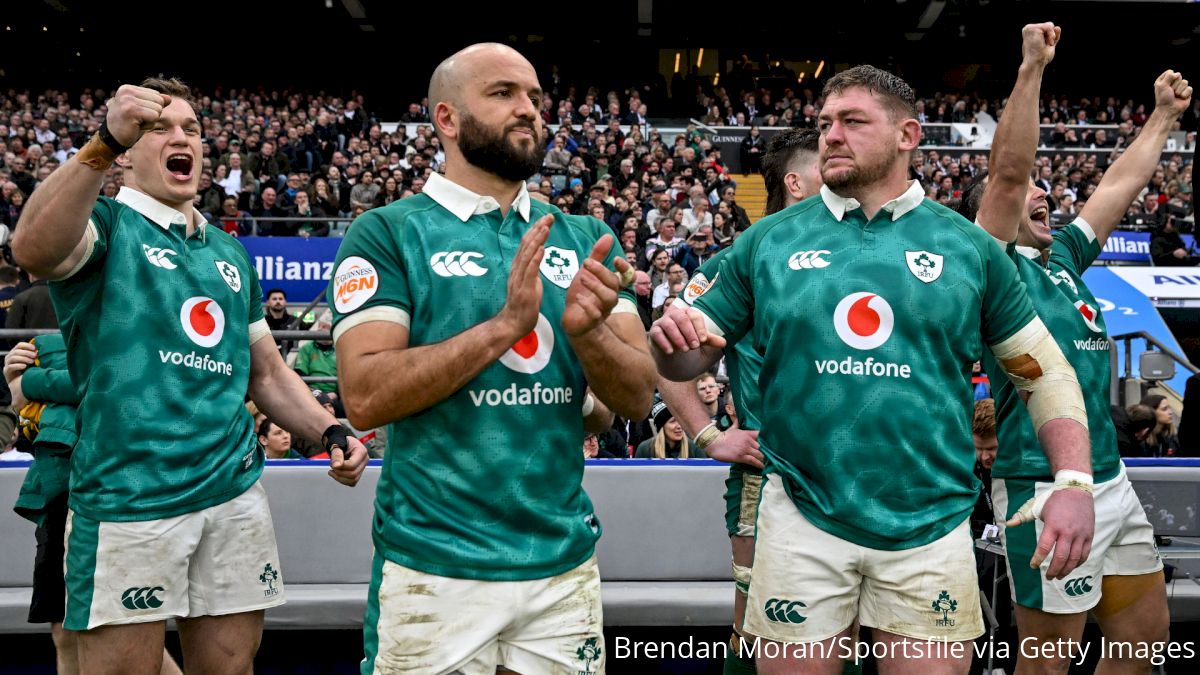
Ireland’s final outing of the 2026 Guinness Six Nations arrives with everything still to play for, as Scotland travels to Dublin for a decisive Super Saturday clash.
Andy Farrell’s side enters the contest knowing victory would secure the Triple Crown and keep alive hopes of a third championship in four years.
Yet, even if Ireland complete its side of the equation, the destination of the trophy ultimately will hinge on events later in the day when England faces France in Paris.
- URC Round 12 Recap: Lions Claim SA Shield As Play Off Race Tightens
- FloRugby's Professional Club Power Rankings: Feb. 25, 2026
- See What's Streaming On FloRugby
- FloRugby's Professional Club Power Rankings: March 11, 2026
For now, Ireland’s focus will be squarely on a Scottish side arriving full of belief after a high-scoring triumph over France last weekend.
Gregor Townsend’s men have rediscovered attacking fluency during the Six Nations Championship and have proven they possess the firepower to trouble any defense when they are allowed to play at pace.
Much of that threat stems from the influence of Finn Russell.
The Scotland fly-half remains one of the most creative operators in World Rugby, capable of stretching defensive systems with his vision and ability to release runners into space.
With Blair Kinghorn offering counter attacking threat from fullback, and wings Darcy Graham and Kyle Steyn providing pace on the edges, Scotland is particularly dangerous once the ball reaches the wider channels. Stopping that flow will be central to Ireland’s game plan.
Ireland has built its recent dominance in this fixture on its ability to dictate the terms of engagement. Instead of allowing Scotland the freedom to play expansively, the men in green have repeatedly forced the game into tighter exchanges, where physicality, breakdown accuracy and defensive organization become decisive.
Saturday’s encounter is likely to follow a similar script.
Farrell’s selection points clearly toward that intention.
Joe McCarthy steps into the second row following James Ryan’s injury, while Dan Sheehan and Josh van der Flier both return to the starting lineup. Their inclusion strengthens an Irish pack already anchored by the experience of Tadhg Beirne, Jack Conan and captain Caelan Doris.
If Ireland is to control this contest, the forwards must dominate the collision zone. Winning the gainline and slowing Scotland’s ruck speed will be essential in preventing Russell from operating on the front foot. Quick ball is the oxygen that fuels Scotland’s attack. Deny that, and much of Scotland's threat diminishes.
The breakdown battle therefore becomes critical.
Van der Flier and Doris are among the most effective jackal threats in international rugby, and their ability to disrupt Scottish possession could dictate the tempo of the game. Every second Scotland spends resetting its attack, rather than accelerating it, plays into Ireland’s hands.
Equally important, will be Ireland’s defensive connection in the midfield.
Garry Ringrose and Stuart McCloskey must shut down the inside channels that allow Russell to manipulate defences before spreading the ball wide. If Scotland’s midfield runners are forced to operate behind the gainline, the space outside them quickly disappears.
Scotland’s confidence should not be underestimated.
The Scots' attacking display against France demonstrated just how dangerous they can be when their forwards generate quick ruck ball and their backs are given license to play. With players such as Sione Tuipulotu and Huw Jones capable of creating line breaks from limited opportunities, Ireland will need to remain disciplined throughout.
Yet, Ireland’s home record under Farrell has been formidable, and history also leans heavily in Ireland's favor. The Irish have consistently managed to drag Scotland into a structured arm wrestle where patience, accuracy and physical dominance gradually tilt the balance.
That blueprint is likely to be the deciding factor once again.
If Ireland succeeds in controlling the contact area and limiting Scotland’s ability to play expansively, Ireland's power and composure should gradually take hold as the match unfolds.
Prediction: Ireland by nine points.
Ireland vs. Scotland Lineups
Ireland
15 Jamie Osborne, 14 Robert Baloucoune, 13 Garry Ringrose, 12 Stuart McCloskey, 11 Tommy O’Brien, 10 Jack Crowley, 9 Jamison Gibson-Park, 8 Caelan Doris (c), 7 Josh van der Flier, 6 Jack Conan, 5 Tadhg Beirne, 4 Joe McCarthy, 3 Tadhg Furlong, 2 Dan Sheehan, 1 Tom O’Toole
Replacements: 16 Ronan Kelleher, 17 Michael Milne, 18 Finlay Bealham, 19 Darragh Murray, 20 Nick Timoney, 21 Craig Casey, 22 Ciaran Frawley, 23 Bundee Aki
Scotland
15 Blair Kinghorn, 14 Darcy Graham, 13 Huw Jones, 12 Sione Tuipulotu (c), 11 Kyle Steyn, 10 Finn Russell, 9 Ben White, 8 Jack Dempsey, 7 Rory Darge, 6 Matt Fagerson, 5 Grant Gilchrist, 4 Max Williamson, 3 Zander Fagerson, 2 George Turner, 1 Pierre Schoeman
Replacements: 16 Ewan Ashman, 17 Rory Sutherland, 18 D’arcy Rae, 19 Alex Craig, 20 Magnus Bradbury, 21 George Horne, 22 Kyle Rowe, 23 Tom Jordan