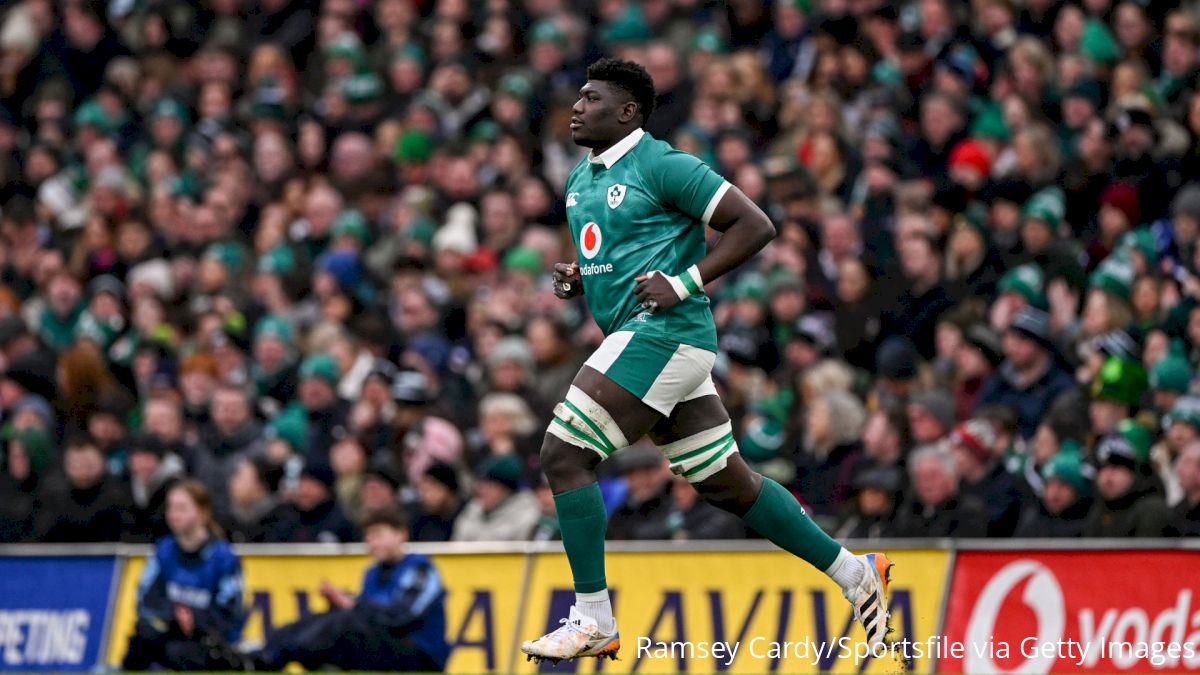
One win from two rounds feels like an accurate reflection of Ireland’s Six Nations to date. Competitive in Paris at points without quite landing enough shots to leave with any points. Convincing in stretches against Italy without fully imposing themselves for eighty minutes.
- More Information On Investec Champions Cup On FloRugby
- More Information On PREM Rugby On FloRugby
- See Every Rugby Europe Match Streaming On FloRugby
- FloRugby's Professional Club Power Rankings: Feb. 4, 2026
The standards of 2022 and 2023, when cohesion felt instinctive and control relentless, have not disappeared, but they are no longer the hallmark of Andy Farrell's team. Perspective however is needed, in reality this is not a declining set-up. It is instead a side that is going through it's regeneration later than it's key opponents. Delaying a major reshuffle in favour of a desire to put to rest the demons of the 2023 Rugby World Cup quarterfinal exit. Ultimately yielding a Six Nations title and drawn test series in South Africa.
The opening fortnight has underlined the reality that this group is transitioning while still expecting to contend. The defeat to France exposed areas that need tightening. The win over Italy revealed depth, impact and a bench capable of shifting momentum. That blend tells the real story. Ireland remain close to the level required to challenge for titles, but they are recalibrating key positions within a squad that peaked emotionally and physically over the last cycle.
That peak was built on a settled spine of Johnny Sexton, Jamison Gibson Park, Garry Ringrose, Bundee Ak, Robbie Henshaw, Andrew Porter, Dan Sheehan, Caelan Doris, Josh van der Flier, Peter O'Mahony, Tadhg Furlong and Hugo Keenan. . The continuity of that group delivered a Grand Slam, a series win in New Zealand and a side that sat at the top of the global rankings. They ultimately fell short in a World Cup quarterfinal that will linger for years, but they responded by winning the 2024 Six Nations with Jack Crowley at ten before the deeper rebuild began.
Now the next phase is taking shape. Joe McCarthy and Edwin Edogbo are central to the future engine room. Cormac Izuchukwu has the athletic profile to become a modern test mainstay. Van der Flier and Furlong remain hugely important players, but the reality of regeneration means no shirt can be immune from competition. Injuries to Porter, Keenan, Hansen, Ahern, Boyle and others have masked the full picture.
Yet the depth beneath them is substantial. Tom Stewart, Billy Bohan and Jude Postlethwaite will all be significant Irish players. Munster’s Brian Gleeson, Ruadhna Quinn, Evan O'Connell and Sean Edogbo, Ulster’s Ward brothers, Zac and Bryn, Harry Sheridan and Scott Wilson, Connacht’s Hugh Gavin, Shane Jennings, Harry West, Sean Naughton, Sam Illo and Shayne Bolton, Leinster’s JJ Kenny, Fintan Gunne, Niall Smyth, Diarmuid Mangan and Alex Soroka, the talent pool is not thinning. This group of players are but the surface level of a very deep talent pool.
Within that wider landscape, the conversation at ten is important, but it is part of a bigger structural question rather than the entire debate. Ireland are in an enviable position with Jack Crowley, Sam Prendergast, Harry Byrne and Ciaran Frawley all capable of operating at test level.
Crowley has already shown he can manage high leverage matches and steer a championship winning campaign. Prendergast’s ability to play square, distribute ambitiously and challenge defensive spacing marks him as a long term cornerstone perhaps even alongside Crowley. Byrne offers composure and the most controlled tactical kicking profile of the group, while Frawley brings versatility and big match temperament alongside occasional unpredictability.
The task now is sequencing that depth intelligently. Crowley is the most rounded test operator at present and should be embedded as first choice through this Championship and towards 2027.
That does not diminish Prendergast’s trajectory. It simply allows him to develop with graduated responsibility rather than carrying the attacking framework against elite opposition every week. Byrne and Frawley also require meaningful minutes if Ireland are to avoid over reliance on one solution. Ulster’s Jack Murphy is emerging behind them and will deserve exposure in due course.
Twickenham sharpens the focus. England will test Ireland in the air through George Ford’s kicking game and apply pressure through breakdown contest. Scotland showed that England can be unsettled when opponents remain connected in the backfield and attack with direct, quick multiphase rugby built on dominance at the collision and ruck. Ireland’s selection should reflect that blueprint and as such below is the team we would like to see take to Twickenham.
Team To Face England
1. Tom O’Toole, 2. Ronan Kelleher, 3. Tadhg Furlong, 4. Edwin Edogbo, 5. James Ryan, 6. Cormac Izuchukwu, 7. Caelan Doris (C), 8. Jack Conan, 9. Jamison Gibson Park, 10. Jack Crowley, 11. James Lowe, 12. Stuart McCloskey, 13. Jude Postlethwaite, 14. Robert Baloucoune, 15. Jamie Osborne
Replacements:
16. Dan Sheehan, 17. Michael Milne, 18. Thomas Clarkson, 19. Joe McCarthy, 20. Tadhg Beirne, 21. Nick Timoney, 22. Craig Casey, 23. Ciaran Frawley
Selection Breakdown
O’Toole’s impact against Italy warrants further opportunity regardless of the loosehead or tighthead debate, particularly given the carrying and defensive edge he offers against a powerful English pack. Kelleher’s scrummaging and breakdown threat complement that selection, with Sheehan primed to influence proceedings later. Furlong, even returning from injury, remains Ireland’s premier tighthead when fully fit, though genuine competition beneath him is healthy.
In secondrow, Edwin Edogbo partners James Ryan to inject size and menace against England's hard edged pairing of Maro Itoje and Ollie Chessu. This combination has the potential to absolutely wreck shop the English breakdown and maul.
In the backrow Cormac Izuchukwu’s aerial dominance and dynamism suits what will be a physical Twickenham contest. Caelan Doris continues to adapt at seven and needs consistent game time in the shirt to get to an elite level with Jack Conan’s work rate at eight too strong to ignore, especially opposite his fellow Lion in Ben Earl.
Jamison Gibson Park’s authority is essential away from home, and Jack Crowley’s control and defensive solidity provide the balance required in a high pressure environment where territory and aerial management will matter. Offensively this pairing have the ability to pick apart England's blitz defence before finding the space on the fringes where in short, England are vulnerable.
James Lowe’s left boot strengthens Ireland’s kicking game whilst his ability to cover the backfield will defuse England's biggest waepon which at present is George Ford's boot. Stuart McCloskey’s form across the opening rounds makes him undroppable as does his offloading ability and defensive solidity. Earning his first real shot in the jersey Jude Postlethwaite could be exactly the x-factor operator that Ireland need in the midfield to pick apart the English defensive system. Robert Baloucoune’s finishing and electric pace will be a dynamic weapon to again target the English fringe defence. Completing the backline, Jamies Osborne’s command of the backfield will be critical given the expected aerial exchanges.
The bench maintains both power and long term vision. Michael Milne and Thomas Clarkson continue to build Ireland's front row depth and are both powerhouse carriers. Joe McCarthy and Tadhg Beirne offer impact and experience in the final third. Beirne is a player who has played a huge amount of elite rugby over the past three years and managing his game time whilst ensuring he is on for the key portion of the match is a huge advantage. Nick Timoney provides versatility and oomph from the bench in addition to being a nightmare at the breakdown.
Covering the backline Craig Casey injects tempo in the final quarter. Completing the squad Ciaran Frawley’s flexibility to cover 10, 12 and 15 will ensure that if Ireland do sustain backline injuries, they will not require a major reshuffle. Throw into the mix, Frawley's big game temperament, defensive solidity and ability to land long distance shots at goal, Ireland suddenly have a key finisher in the backline.
This Championship was always likely to feature turbulence as Ireland regenerate later in the cycle than their rivals. As touched upon above, instead of taking the pain earlier in the cycle, Farrell opted for continuity. This changing of the guard was inevitable and whilst the current injury list is a challenge, there is no doubt it will make Ireland stronger long term.
The encouraging reality is that the talent base remains strong and the next spine is forming around the likes of Gibson Park, Crowley, McCloskey, Baloucoune, Doris, Edogbo, Joe and Paddy McCarthy .If Ireland can combine that emerging core with clarity of selection and incremental cohesion, they will not only compete in this Six Nations but build genuine momentum towards the 2027 Six Nations and Rugby World Cup competitions.
Twickenham offers the first real chance to accelerate that belief as it did when Ireland secured a narrative shifting victory over England in 2021.