The opening weekend of the July Internationals delivered a gripping blend of drama, promise and stark reality checks for rugby teams across the globe.
With several top-tier sides fielding experimental lineups and emerging nations given opportunities to make statements, Week 1 offered no shortage of takeaways.
- Subscribe To FloRugby To Watch Rugby All Year Long
- FloRugby Top 100 Players Coverage
- Rugby Today: Here's What's Streaming On FloRugby
From Australia’s toothless breakdown performance to Japan’s stunning comeback over Wales, every fixture exposed critical strengths and glaring weaknesses.
Some nations, like Ireland and England, found valuable depth and cohesion, despite missing front-line stars, while others, most notably Georgia and Wales, suffered damaging defeats that raised deeper concerns about their trajectories.
The All Blacks and Springboks, rugby’s traditional powerhouses, also looked far from polished, struggling to assert full control, despite favorable matchups.
Meanwhile, Fiji, France and Argentina showed glimpses of brilliance, offset by inconsistencies that continue to limit their ceilings.
Across the board, this round served not only as a measuring stick for coaches, but as a catalyst for what must be rapid adjustments.
With more tests on the horizon and squad selections under scrutiny, the pressure is on every team to respond.
July International Rugby Results
Saturday, July 5
- Scotland def. Maori All Blacks, 29-26
- Japan def. Wales, 24-19
- New Zealand def. France, 31-27
- South Africa def. Italy, 42-24
- Ireland def. Georgia, 34-5
- England def. Argentina, 35-12Sunday 6th July
Sunday, July 6
- Australia def. Fiji, 21-18
Australia
Improvement is needed quickly! Where it will come from is anyone’s guess.
Against a strong Fijian side, the Wallabies were made to look very average across the board.
Brutally poor at the breakdown, the Wallabies could not maintain any pace in the game. When they did get the ball, their attacking shapes faded away after the early phases and became predictable for the Fijians.
Fortunately for the Wallabies, Fiji’s defense around the ruck allowed them just enough opportunities to strike, but this will not be the case against the Lions.
At set-piece time, the Wallabies scrum was solid, but a lack of communication at line-out time denied them a few good attacking opportunities.
Finally, the Wallabies' tackle completion rate of 86% led to 29 missed tackles, with several of these coming in the buildup to Fiji’s special second try.
Getting over the line via a controversial late try will be a relief for the Wallabies, but if they do not up their game significantly, it could be an ugly series against the Lions.
Argentina
Far from the side that turned over the Lions in Dublin, Los Pumas had one of those days where things simply didn’t stick.
Unable to match the power of the English pack, Argentina lost the gainline battle heavily in the second half.
This inability to assert themselves saw England narrow its defensive line before getting plenty of joy in the wide channels.
Most worryingly for Felipe Contepomi’s side was its sloppiness at the contact point breakdown, where England slowed them down at will and turned them over.
For Argentina to take the next step as a truly dominant side in test rugby, the team needs to find a level of consistency. Far too often in the past few seasons, they have gone from having a 9/10 performance one week to a 3/10 the next time out.
England
Growing season on season under Steve Borthwick, England’s resilient performance in La Plata was a major step forward.
Weathering a first-half storm where neither side could make any inroads, England led 3-0 courtesy of a George Ford drop goal.
Adjusting at halftime, Borthwick’s side targeted the fringes of the Argentine defense and got the ball wide effectively.
In conjunction with the wide game, England’s pack was immense, with Tom Willis, in particular, getting over the gainline with regularity.
Getting their chance with the front-liners away with the Lions, England’s fringe players took full advantage of the opportunity, which will stand to the squad as they build toward the World Cup.
Fiji
Denied another big victory over the Wallabies courtesy of a controversial late try by Harry Wilson, Fiji looked strong in certain areas and fragile in others ahead of their upcoming clash with Scotland and the Pacific Nations Series.
Shredding the Wallabies in the wide channels, Fiji was exceptional early in their attack sets.
Forcing the Wallabies to bite in to try to stop them at source, Fiji had several opportunities to get over the line, which would’ve been the difference in Newcastle.
Unfortunately for Mick Byrne’s side, when it came to multi-phase play, their fluidity didn’t quite come to fruition, and they quickly ran out of options.
At set-piece, their scrum struggled against the Wallabies, while defensively, they were caught narrow far too easily in the phase count. This issue started with their inability to slow the Wallabies close to the ruck and forced them to backpedal. Rectifying this area will go a long way to helping them solidify the integrity of their defensive line.
France
Coming awfully close to a famous victory, Les Bleus’ young side would be undone by a lack of ability to hold onto possession for sustained periods.
Allowing their hosts to have 62% possession and 54% territory limited their opportunities to get the crucial go-ahead score.
Overall, they did exceptionally well to hold out the All Blacks, but they did miss 30 tackles throughout the match, which, on another day, the Kiwis will punish them for doing.
Across the board, Fabien Galthie’s young charges shone, most notably Emilien Gailleton, Theo Attissogbe and Mickael Guillard, all looking like potential full-time starters.
Adding a layer of experience to proceedings, Toulon winger Gabin Villiere, who was harshly yellow-carded, was immense.
France will need to expect a reaction from the All Blacks in the second test, but if they can get on level footing with possession, the French have more than enough firepower to pull off the upset.
Georgia
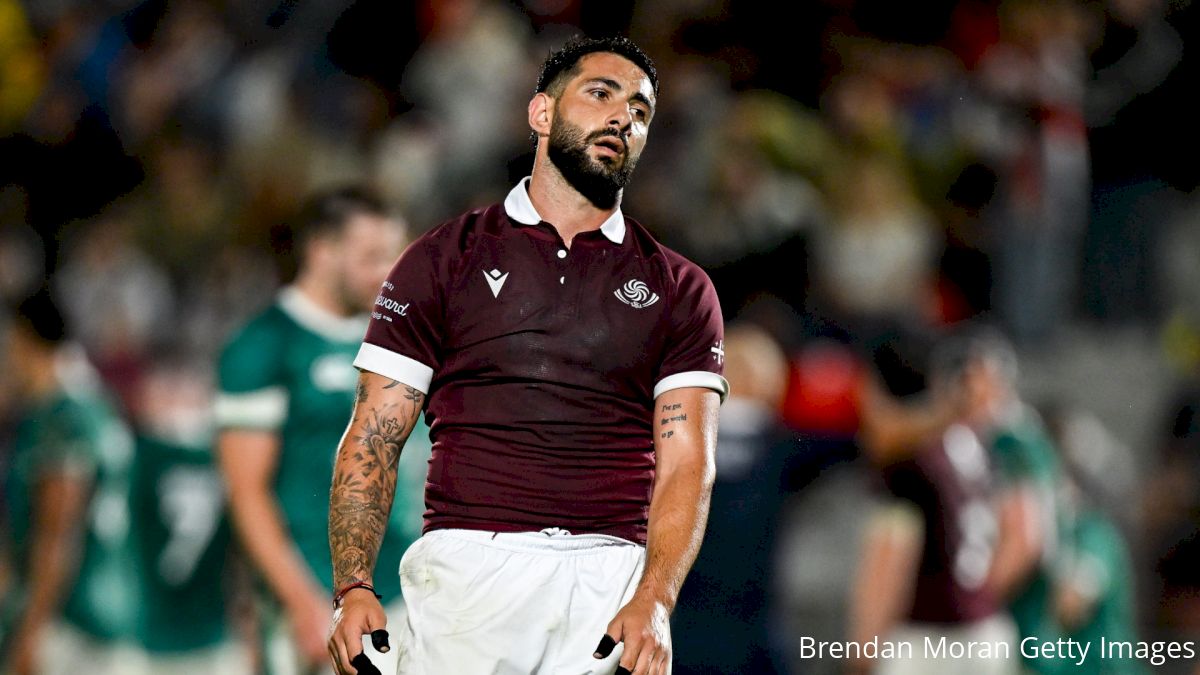
Crying out for a chance to dine at the top table regularly, Georgia completely flat-lined against Ireland in what must be considered its most disappointing performance of the past decade.
Presented with a golden opportunity to push its case further, Richard Cockerill’s side was blitzed by a young Irish side missing 16 players, plus a handful of key experiences through injury.
Outside of two well-set mauls, Georgia never looked like troubling Ireland and will know that if the squad doesn't up its game next time out against the Springboks, Georgia could be on the receiving end of a hiding.
In truth, this performance screamed of desperation, and who could blame the Lelos? Their continued absence from a top-level competition feels unjust. Unfortunately, this weekend will be used as a stick to bat back their calls for a Six Nations berth.
Ireland
Despite missing 16 British and Irish Lions and several key internationals, Paul O’Connell’s youthful Irish side produced an emphatic win over Georgia in a rain-soaked Tbilisi encounter.
The inexperienced pack overcame early scrum wobbles to assert dominance, with the back row of Ryan Baird, Nick Timoney and Gavin Coombes leading the charge.
Baird controlled the line-out, Timoney was a relentless force at the breakdown and Coombes consistently made hard-earned meters in the carry.
In the backs, captain Craig Casey delivered a composed performance, underscoring his growing challenge to Jamison Gibson-Park for the No. 9 shirt.
Fly-half Sam Prendergast had a mixed outing—his kicking and vision showed promise, but questions remain over his physicality and consistency.
Out wide, Jacob Stockdale, Tommy O’Brien and substitute Calvin Nash all impressed.
Stockdale looked sharp before a suspected serious shoulder injury ended his day prematurely in the 35th minute. By then, he'd racked up 50 meters and several broken tackles.
O’Brien, back from a long injury layoff, seized his chance with two superbly taken tries, while Nash added late-game pace and punch that left Georgia reeling.
Still, not all Irish players shined.
Cormac Izuchukwu, deployed in the second row, was largely muted and restricted to just two carries before being replaced by Tom Ahern in the 62nd minute.
Izuchukwu’s performance suggested his test-level future may lie in the back row, rather than at lock.
Ahern, his Munster teammate, failed to lift the tempo and posted equally underwhelming numbers.
Hooker Tom Stewart also struggled, absorbing two heavy, arguably borderline hits, and finding little opportunity to influence the game.
While this outing showcased Ireland’s exciting depth and promise, it also underlined the developmental gaps that remain for several fringe players hoping to stake their claim at the highest level.
Japan
Netting a signature win for Eddie Jones’ second stint in charge, the new-look Japanese side showed incredible gumption to overturn a multiple-score deficit and down Wales.
As a standalone victory, this was a superb result for the Brave Blossoms, who, in reality, still are a way off being the finished article.
Yet, there are shoots there that point to them being competitive come the next Rugby World Cup.
Chief among the positives is the giant lock Warner Dearns, who is a special athlete. At 6-foot-8, the 23-year-old, Wellington-born lock brings a unique physical skillset that takes Japan to another level.
His ability to dominate at line-out time, combined with his top-end pace and offloading ability in open play, makes him a key building block for Jones and his coaching staff.
New Zealand
Clunky; this is perhaps the best way to describe the All Blacks, who fired in fits and spurts but really never got any fluidity into their game.
Across the board, combinations just didn’t quite appear to have the right balance.
In the front row, the starting trio of de Groot, Taylor and Newell were the pick of the bunch with a strong scrummaging performance against a good French front row.
Everywhere else, the combinations simply did not click how Robertson would’ve hoped.
Dutch debutant Fabian Holland got through a mountain of work, but his lock partner, Scott Barrett, was a shell of his best self. Lacking the punch that made him such an integral part of the All Black pack, the skipper looked flat throughout the contest.
In the back row, Ardie Savea was world-class, in particular when returning French goal-line drop-outs. His back-row partners in Tupou Vaa’i and Christian Lio-Willie each had mixed performances.
Vaa’i brought a great option at line-out and scored a well-taken try from close range.
No. 8, Lio-Willie, was pretty average across the board and certainly didn’t do enough to lock down his position.
In the back line, Cam Roigard and Will Jordan were top-notch, as was Jordie Barrett, but the rest of the back line left a lot to be desired.
In summation, Robertson has plenty of decisions to make ahead of the next test.
Does he stick with his team and double down in search of cohesion, or does he shift to find balance in his squad?
South Africa
Fizzle. That is what South Africa’s bomb squad did Saturday against an Italian side missing 10 of its regular starters.
Despite racing out to a 28-3 half-time lead, the world champions were made to work for the full 80 minutes at Loftus Versfeld.
Abandoning their usual killer instinct, the Boks became complacent and lost the physical battle with the Azzuri, who outscored their hosts three tries to two in the second half, with two tries ruled out.
This performance irked Rassie Erasmus to such an extent that he threatened to make sweeping changes to the team’s plans for the next test.
Most concerningly for Erasmus was that his side began to crack in areas that usually are their strengths, namely the line-out, where they only had a 75% success rate.
Rolling on the bulk of his bench in the 47th minute, with the remainder coming within the next 10 minutes, Erasmus would’ve expected an upping of the intensity.
Instead, the Boks fell victim to uncharacteristic errors in the face of a ferocious Italian onslaught.
In the pack, the 'Bomb Squad' was abysmal, with the usually reliable Bongi Mbonambi notably off the pace, as was Kwagga Smith.
Looking long-term, this lack of impact could well see Erasmus accelerate his squad transition with several senior players nearing the twilight of their careers.
More likely, however, understanding the way Rassie operates, this performance likely will be a long-term positive, as his charges will be forced to look within themselves. When this happens, there is usually a major response.
Wales
This is the low point, make no bones about it.
Facing a Japanese side with eight debutants, Wales let slip a significant lead in what was the most embarrassing day in Welsh Rugby history.
Lacking control in the halfbacks, slipping off tackles and fading in the heat, Matt Sherratt’s side simply did not look like a Tier 1 test outfit.
Instead of taking control of the contest, Wales allowed Japan to up the tempo when the team should’ve fronted up physically and closed down the match.
Devoid of quality, Wales is in a position where there is no quick fix.
Arguably possessing just six truly top-level internationals in Dewi Lake, Jac Morgan, Tomos Williams, Max Llewelyn, Nicky Smith and Blair Murray, it is hard to see how Wales will be competitive in the next five years.
How To Watch Rugby Matches In The United States On FloRugby
FloRugby and FloSports also are the U.S. home to:
FloRugby also is home to match archives and match replays.