USA Outmuscles Belgium: Key Takeaways From Physical Victory In Charlotte
USA Outmuscles Belgium: Key Takeaways From Physical Victory In Charlotte
The USA Men's Eagles kicked off their 2025 rugby season with a 36-17 win over Belgium in Charlotte, showcasing forward dominance and areas for improvement.
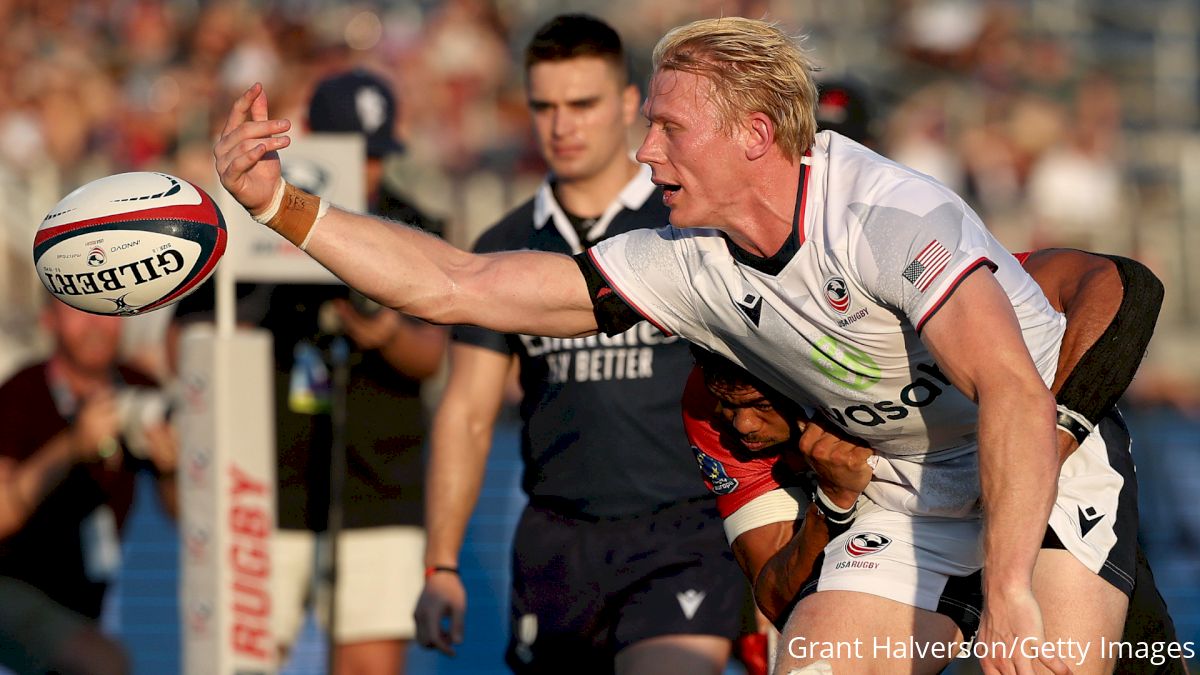
The USA Men’s Eagles began their 2025 campaign with a decisive 36-17 victory over Belgium on Saturday at American Legion Memorial Stadium in Charlotte, North Carolina, marking the first test in history between the two sides.
Despite the commanding scoreline and a six-try haul, the performance was a blend of brute-force execution, moments of promise from debutants and clear areas for refinement as the Eagles progress through their summer series.
- Subscribe To FloRugby To Watch Rugby All Year Long
- FloRugby Top 100 Players Coverage
- Rugby Today: Here's What's Streaming On FloRugby
The USA were physically dominant, statistically superior in carries (131 to 79), meters post-contact (347 to 250) and line breaks (8 to 3), and they scored all six of their tries through forwards or midfielders, a clear sign of their power-focused approach.
But they also left points on the table, dominating possession (57%) and territory (65%), 40% of which came in the Belgian 22.
Taking their time to break down their visitors, the Eagles' pressure would squeeze the Belgians before their physicality and fitness levels put the contest out of sight.
Defensively, there were plenty of work-ons for Scott Lawrence's side, as they completed just 79% of their tackles, surrendering two tries to Belgian fullback Matias Remue and replacement Simeon Soenen.
Both of these tries came from long range and were moments of individual brilliance the Eagles would've hoped to deal with better.
Overall, there were plenty of positives and some work-ons from the first test of the USA's season.
Here are some key takeaways from the match in Charlotte:
Flat Attack And Midfield Structure
A clear tactical decision for the Eagles was their shape off set-piece ball.
The USA consistently played flat to the line, using Tavite Lopeti as the first distributor, with AJ MacGinty sweeping behind.
The structure allowed them to engage the Belgian defense directly, but it also left little margin for error.
Without deeper positioning or layered running lines, plays sometimes became telegraphed, particularly early on.
Lopeti, however, proved effective in the role, carrying 10 times for 57 meters and scoring a well-earned try in the 51st minute with a decisive breakthrough contact.
MacGinty, who led the team with 61 meters carried, kicked well for territory, as well as adding three conversions.
At times, the flat attacking structures had the Eagles' carriers being caught behind the gainline or forced into a handling error. This being said, the Eagles' power and pace in the centers do make this system tick, and when the attack clicked, the home side made great yardage quickly.
Forward Impact And Set-Piece Dominance
Where the USA truly controlled the match was in the tight exchanges.
All three starting back-row players, Benja Bonasso, Cory Daniel and Vili Helu, crossed the try line.
Bonasso, in his first match as captain, had 15 carries and a try, along with two turnovers.
Daniel was especially impactful, leading the team in tackles (13), posting 39 meters on seven carries and scoring off a maul in the 60th minute.
The set-piece was a pillar of consistency.
The Eagles won all 13 of their line-outs and 88% of their scrums, with Helu winning five line-outs and debutant Marno Redelinghuys adding physicality in contact.
USA’s scrum, particularly in the first half, looked dominant, though Belgium's unwillingness to engage on the hit, and inconsistent officiating, meant the Americans were not fully rewarded.
Jack Iscaro and Tonga Kofe were standouts, both in set-piece and open play.
Kofe’s thumping tackle in the 34th minute set the tone physically, and Iscaro’s offload before halftime added a moment of flair to the forward effort.
New Talent Delivers
Five players earned their first caps for the USA, and all made meaningful contributions.
Alikhan, entering as an impact sub, scored a try and registered key meters with dynamic running.
Redelinghuys was among the most physical defenders, recording two dominant tackles.
Tevita Naqali and Tonga Kofe gave the Eagles additional edge in contact, while former German international Chris Hilsenbeck came on late to close out the match at fly-half.
Dominic Besag, though not a debutant, was among the most dangerous runners, with four defenders beaten and 44 meters gained. His 25th-minute try, exploiting a misaligned Belgian line, ignited the Eagles after a slow start and came off a pinpoint pass from scrumhalf Ruben de Haas.
Defensive Warnings And Backfield Fragility
Despite the dominance in carries and meters, the Eagles conceded two soft tries and missed 22 tackles.
Tackle completion was just 79%, and Belgium’s Remue punished the USA’s narrow defensive line twice, once with a perfectly weighted chip-and-chase, and again by exploiting disjointed backfield coverage.
The USA’s rush defense at times left the backfield exposed.
The first Belgian points came from a penalty forced by poor sweeper positioning following a set-piece exit.
Later in the first half, Belgium again chipped over the advancing line, forcing scrumhalf Ruben de Haas to scramble in coverage.
Overall, when the Eagles managed to limit the Belgians' ability to get wide, their defense looked rock solid.
The one area that appeared vulnerable was the wide channels, with the USA's defense at times being caught a bit narrow, with Dominic Besag and the wingers jamming inwards, leaving space out wide for the Belgian back three.
Striking the right balance between line pressure and backfield cover is a difficult needle to thread, and the Eagles will get more cohesion defensively the more time they are in camp.
Execution in the Red Zone
The Eagles spent significant stretches of the match inside Belgium’s 22, registering 40% of their possession in that area, but turned over the ball 15 times and were held scoreless on several extended sequences.
Early in the first half, a promising attack was undone by a standing pass to MacGinty, and another opportunity was lost following a line-out when the Eagles surrendered the ball under pressure.
Once the USA shifted to more direct phase play utilizing quick ruck ball in tight, complemented by well-placed offloads and support lines and their dominant forward pack, they found consistent success.
Most of the host's success came through either midfield breaks or tight forward structure, suggesting that a more measured build-up could yield even more efficiency.
Looking Ahead
The 36-17 win provides the Eagles with a solid foundation for the 2025 season, and it also highlights areas for improvement and development.
Defensive cohesion, decision-making in transition and variation in attack structure, particularly in red-zone sets, all are focal points heading into next week’s clash against Spain.
With a balance of veteran leadership and emerging talent, the USA’s physical edge is clearly becoming a core part of its identity.
But as Belgium proved, tactical execution and shape discipline will be critical as the Eagles move toward tougher challenges ahead, including a matchup with England in two weeks.
The signs are encouraging for Lawrence's side, with more formidable challenges coming over the next two weeks, which will be followed closely by the Pacific Nations Series, where the all-important Rugby World Cup 2027 qualification will be on the line.
How To Watch Rugby Matches In The United States On FloRugby
FloRugby and FloSports also are the U.S. home to:
FloRugby also is home to match archives and match replays.