One Question Each Six Nations Team Needs To Answer In Their Warm-Up Games
One Question Each Six Nations Team Needs To Answer In Their Warm-Up Games
We take a look at the one major question each Six Nations team must address in their upcoming warm-up matches before the World Cup begins.
With the World Cup just over a month away, the time for final preparation is now. The next few weeks will give teams the chance to dust off the cobwebs and try some formulas that may become pivotal to their chances of winning.
Some sides, such as Ireland and France, already are well-prepared and possess the players and skills to out box any side.
The rest of the sides from the Northern Hemisphere are not as complete and will require a good showing in their warm-up matches to gain confidence heading into the World Cup.
Here, Flo Rugby takes a look at the main issue each member of the Six Nations must address ahead of the World Cup.
France
There’s not a lot wrong with the French. Their squad depth is perhaps the best in the world, and their ability to improvise is second to none.
In 2022, France won the Grand Slam and followed that with another impressive campaign, pushing Ireland to the wire in a nail-biting game in Dublin. In that fixture, France looked brilliant when forced to play off-the-cuff rugby but struggled when faced with the organizational rigidity of the Irish attack.
Sometimes, it feels as though France is so hyper-aware of its own talent that they feel they need to play lights-out rugby at every opportunity.
Ireland showed them this is not always needed. Sometimes, a few repetitive phases can give a team time to reset and prepare for another stroke of attacking ingenuity.
Italy
By all accounts, Italy is the runt of the Six Nations.
For years Italy has sat at the bottom of the table, perennially struggling for points. However, in recent years, the Azzurri have started to look more accomplished.
Where in past seasons they’d struggle to even lay and hand on the opposition, they now have the players and tools to break down the best the Northern Hemisphere has to offer.
And yet, they still lose, as was shown when they finished at the bottom of the Six Nations once again in the latest campaign.
The major thing holding the team back is its accuracy.
On too many occasions, Italy threads together some excellent play in the attacking phase, only to muck up their patterns with a loose pass or lazy catch attempt.
These mistakes are best described as brain fades and happened a worryingly high amount when they played against Wales in March, in a match they should have won.
The structures and shapes Italy built in both defense and attack are extremely impressive, which shows the issue is not with the coaching staff, but rather the execution of those strategies.
Fix those brain fades, and Italy could cause France and New Zealand some problems when the World Cup pulls around.
Due caps ☑ una meta ☑
— Italrugby (@Federugby) August 5, 2023
Lorenzo #Pani vola ⚡
📺 Sky Sport ▪️ TV8 ▪️ NOW#IREvITA #SummerNationsSeries#insieme #rugbypassioneitaliana pic.twitter.com/UcEPjLIGF8
Wales
Pick a team and stick with it. That’s the central message to the Welsh team at the moment.
Under Wayne Pivac, no center partnership played together more than three times, which created a high level of inconsistency week upon week. That chopping and changing did little to help the overall cohesion of the squad and formed uncertainty amongst the players.
Since Warren Gatland’s return, the approach to squad selection in the latest Six Nations was much of the same, typified by starting older heads one week, only to remove them from the starting 23 entirely in the next round.
If Wales is to stand any chance of progressing from its group, which arguably is the lightest in the tournament with Australia involved, the squad must resort to maintaining a consistent starting XV through each round.
This process has been made easier following the international retirements of some high-profile Welsh stars, including Alun Wyn Jones, Justin Tipuric and Rhys Webb. Their absence will be hard to fill, but it does give younger athletes the chance to establish themselves as starters through the upcoming warm-up games.
Ireland
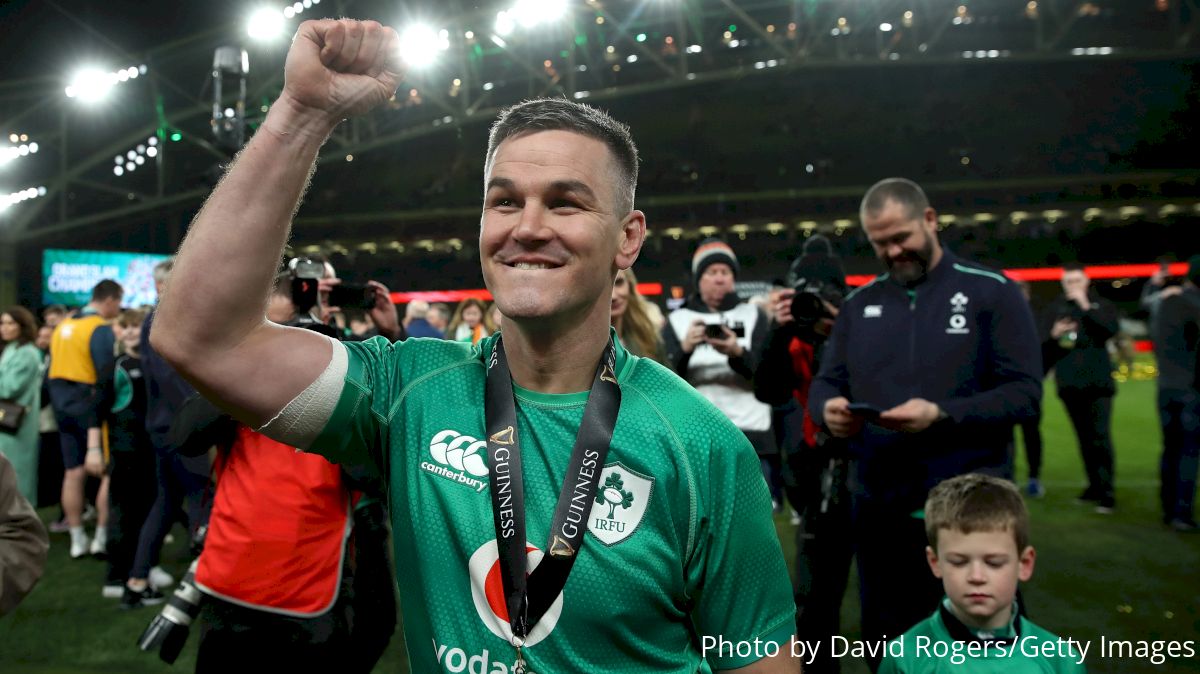
Ireland’s dilemma is a very simple one: Johnny Sexton. The veteran fly-half is an Irish legend and remains a pivotal part of their attacking interplay.
Despite his value, there are serious question marks looming around his involvement, the first being his fitness. The 38-year-old has featured sparingly this season and last took to a rugby field when Ireland beat England to secure a Grand Slam.
Injury ruled him out of any further games with Leinster, meaning the playmaker will enter the World Cup with limited games under his belt.
The situation becomes even more complicated following the ban Sexton received for berating and swearing at the refereeing team at the Champions Cup final in Dublin.
He received a three-match ban for his actions, which means he will miss the majority of Ireland’s warm-up games, meaning he will enter the World Cup having not played professional rugby for almost six months.
That’s why the primary thing Ireland needs to prove in its warm-up games is functioning without Sexton. That means Ross Byrne will need to take the reins and lead Ireland with poise and composure. If he shows he can do that, Byrne may be favored over Sexton when all nations flock to Paris this autumn.
⏪ This day last year!#TeamOfUs | #IrishRugby pic.twitter.com/5J6mcDOim4
— Irish Rugby (@IrishRugby) July 16, 2023
Scotland
There’s a lot to love about the current iteration of the Scotland national team. The backline is stacked with attacking players brimming with flair, while the pack is filled with physical specimens.
The issue with this Scotland team is not the talent on offer, far from it. Just take a look at the team set to face France tomorrow, and you see a squad that can contend with arguably the best team in the world.
So what’s Scotland’s kryptonite? For Gregor Townsend’s men, the main weakness is consistency.
The team has the ability to put in a great performance against any given team and then directly follow that with a stinker.
In the latest Six Nations, the Scots ripped apart England and were in fine form against France, but they struggled to match the levels of Ireland and wobbled against Wales.
That level of inconsistency is unforgivable at the international level and will be a huge focal point when they begin their warm-up tour this summer.
England
To kick or not to kick, that is the question. At the center of English rugby is the decision between two different styles.
On one side, you have the territorial and pragmatic approach, which Owen Farrell and George Ford typify. It's a safe approach that lends itself nicely to knockout rugby. Then there’s the more maverick, daring approach, which constitutes Marcus Smith playing at 10.
This is defined by improvisation and outlandish trust in the ability of individuals to read a game. The latter is a high-risk strategy that feels like a huge diversion from head coach Steve Borthwick’s usually pragmatic style of play.
If it’s pulled off, it’s a hugely impressive undertaking, but if it falls flat, the blame will fall squarely at the feet of Borthwick.
Smith starts for England this weekend, which opens a new wave of questions about the overall style of play England intends to bring to the World Cup.